Who We Are
The National Marine Life Center is an independent, non-profit, 501(c)(3) organization founded in 1995 as a marine animal hospital, science, and education center. NMLC’s mission is “to rehabilitate and release stranded marine mammals and sea turtles, in order to advance science and education in marine wildlife health and conservation.” With this three-fold mission of rehabilitation, science, and education, NMLC’s contributions to the environment, the community, and the marine animal field are considerable.
Working with stranded animals benefits both the individual animal and also creates opportunities to learn about marine animal populations, wildlife health, and the condition of our ocean and shoreline habitats. By learning about wildlife and ocean health, scientists often discover human health implications. Through NMLC’s programs that teach about marine animal strandings and rehabilitation, children and adults learn about the need for environmental stewardship.
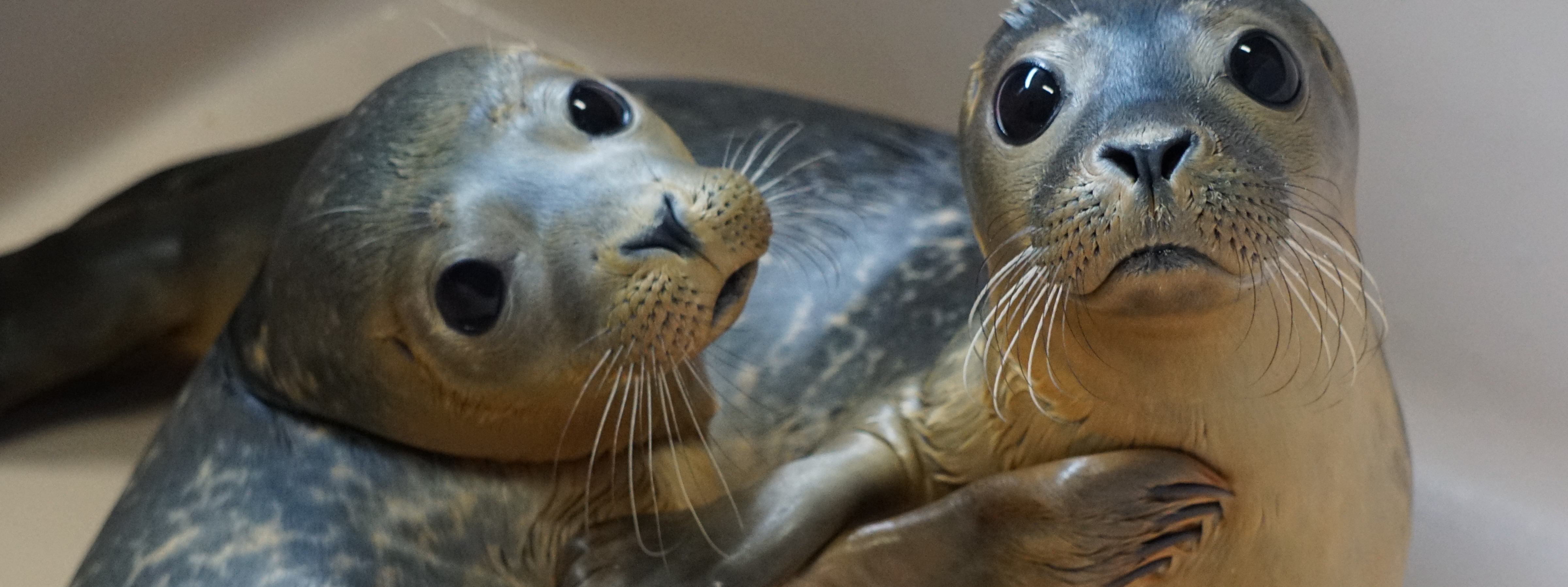
Rehabilitation Program: NMLC’s core mission is to rehabilitate and release stranded marine mammals and sea turtles. Our rehabilitation program goal is to release healthy animals back to the wild and to learn as much as possible from the animals while they are in our care. We care for an average of 112 endangered and protected marine animals every year. We have received, treated, and cured a wide range of sea turtle and seal cases including middle ear disease, verminous pneumonia, parasitic infections, megaesophagus, influenza, osteolytic lesions, broken bones, and injuries from human interactions such as entanglements and boat strikes.
Science Program: Animals in rehabilitation provide important opportunities to learn more about wildlife disease, wild populations, and the marine ecosystem. These findings may also have implications for human health. NMLC is committed to advancing scientific knowledge about strandings and marine wildlife health. Current scientific interests include case studies of our patients; investigations of the role parasites play in marine animal health, stranding, and disease; study of middle ear disease and megaesophagus in seals; osteolytic lesions and shell necrosis in turtles; and satellite and acoustic tagging of released animals.
Education Program: Animals in rehabilitation also provide important opportunities to teach. NMLC delivers enlightening educational experiences focusing on marine animals, the ocean environment, and human impacts on that environment. NMLC’s patients provide a context for teaching about these topics, thereby promoting positive actions and a sense of environmental stewardship. To that end, we conduct hands-on educational programs both on-site and off-site. We reach an average of 9,900 people per year through these STEM-based programs. Another educational initiative is our summer visitor’s center, the Marine Animal Discovery Center. We welcome an average of 8,400 people per year during the summer, both residents and tourists alike. A final area of education is providing hands-on learning opportunities to approximately 24 students per year through internships and service learning projects. These in-depth work/learning programs are valuable opportunities for both NMLC and students alike. Participating students develop important skills in animal husbandry, environmental education, facilities management, administration, interpersonal skills, marketing, fundraising, data entry, water quality testing, and much more.