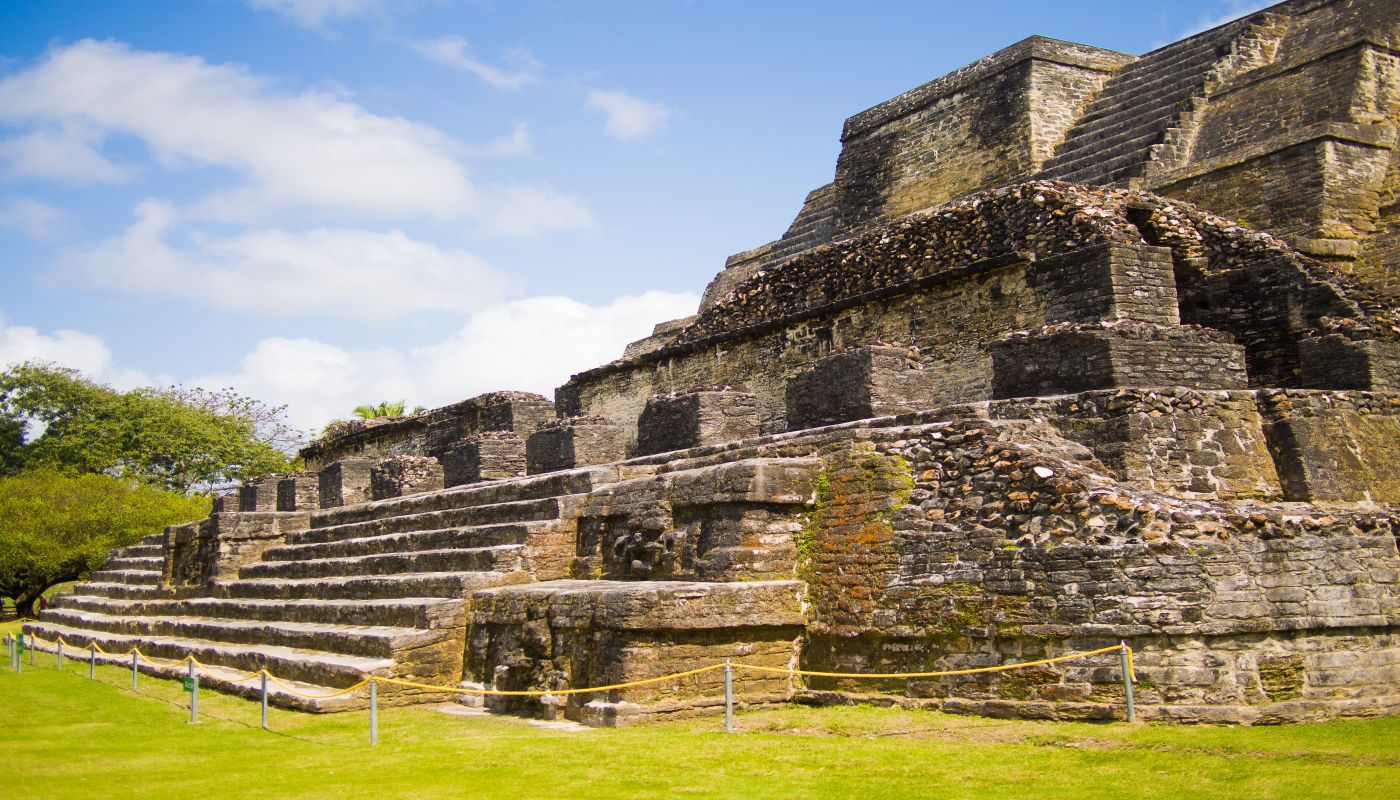
Landscape of Belize
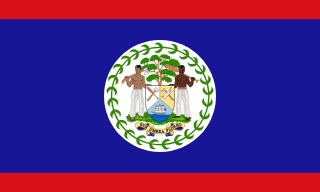
Flag of Belize

Belize

North America

Belize is a beautiful country located in Central America, with a unique mix of Caribbean and Latin American cultures. It is known for its stunning natural landscapes, including lush rainforests, Mayan ruins, and the world's second-largest barrier reef. The country has a population of approximately 400,000 people and covers an area of 8,867 square miles. In recent years, Belize has experienced a steady increase in tourism, contributing to the country's growing economy. Additionally, Belize is committed to sustainability and has set aside over 40% of its land as protected areas and nature reserves, making it a model for eco-tourism and conservation.

What would you like to learn about in Belize?

Select a section to explore the country where nonprofits are creating positive change.

About Belize

Belize was the site of several Mayan city states until their decline at the end of the first millennium A.D. The British and Spanish disputed the region in the 17th and 18th centuries; it formally became the colony of British Honduras in 1854. Territorial disputes between the UK and Guatemala delayed the independence of Belize until 1981. Guatemala refused to recognize the new nation until 1992 and the two countries are involved in an ongoing border dispute. Guatemala and Belize plan to hold a simultaneous referendum, set for 6 October 2013, to determine if this dispute will go before the International Court of Justice at The Hague. Tourism has become the mainstay of the economy. Current concerns include the country's heavy foreign debt burden, high unemployment, growing involvement in the Mexican and South American drug trade, high crime rates, and one of the highest HIV/AIDS prevalence rates in Central America.

Quick Facts

Population
334,297 (July 2013 est.)
Area
22,966 sq km
ISO Code
BZ
Continent
North America
Government
parliamentary democracy and a Commonwealth realm
Active Causes
12
View all countries in North America

Geography & Environment

Climate

tropical; very hot and humid; rainy season (May to November); dry season (February to May)

Terrain

flat, swampy coastal plain; low mountains in south

Natural Resources

arable land potential, timber, fish, hydropower

Environmental Issues

deforestation; water pollution from sewage, industrial effluents, agricultural runoff; solid and sewage waste disposal

People & Society

68.4 years
Avg. Life Expectancy
76.9%
Literacy Rate
52% of total population (2010)
Total Urban Population

Languages

Spanish 46%, Creole 32.9%, Mayan dialects 8.9%, English 3.9% (official), Garifuna 3.4% (Carib), German 3.3%, other 1.4%, unknown 0.2% (2000 census)

Religions

Roman Catholic 39.3%, Pentacostal 8.3%, Seventh Day Adventist 5.3%, Anglican 4.5%, Mennonite 3.7%, Baptist 3.5%, Methodist 2.8%, Nazarene 2.8%, Jehova...

Health Expenditure

5.2% of GDP (2010) of GDP

Education Expenditure

6.6% of GDP (2010) of GDP

Economy

$8,900
GDP per Capita (PPP)
11.3%
Unemployment Rate
41.3% (2010 est.)
Below Poverty Line

Economic Overview

Tourism is the number one foreign exchange earner in this small economy, followed by exports of marine products, citrus, cane sugar, bananas, and garments. The government's expansionary monetary and fiscal policies, initiated in September 1998, led to GDP growth averaging nearly 4% in 1999-2007. Oil discoveries in 2006 bolstered this growth. Exploration efforts have continued and production has increased a small amount. Growth slipped to 0% in 2009, and has remained at just over 2% per year during 2010-2012, as a result of the global slowdown, natural disasters, and a temporary drop in the pri...

Causes in Belize

Human Rights

Human rights are an essential aspect of societal well-being in Belize, a country in Central America known for its rich cultural diversity and natural beauty. Despite progress in protecting human rights, challenges persist in areas such as discrimination against marginalized groups, access to education and healthcare, and gender-based violence. The government of Belize has taken steps to address these issues through legislation and policy frameworks aimed at promoting equality and justice for all its citizens. However, there is still work to be done to ensure that human rights are fully respected and upheld in Belizean society. Increased awareness, advocacy efforts, and collaboration with international organizations are crucial in advancing human rights in the country and ensuring that all individuals can live with dignity and respect.

Education

Belize, a small Central American country, faces various challenges in its education system that have significant implications for its socio-economic development. The country struggles with issues such as inadequate infrastructure, limited resources, and disparities in access to quality education across urban and rural areas. These challenges hinder the overall quality of education provided to Belizean students and contribute to high dropout rates, particularly among marginalized communities. The impact of these educational shortcomings is profound, affecting the country's ability to build a skilled workforce, address poverty, and foster sustainable growth. To address these issues effectively, concerted efforts are required to improve educational policies, enhance teacher training programs, and increase investment in educational resources and facilities.

Poverty

Belize, a small Central American country, faces significant challenges due to poverty. Approximately 41.3% of the population lives below the national poverty line, with rural areas being disproportionately affected. Poverty in Belize is often attributed to limited access to education, healthcare, and employment opportunities, exacerbating socioeconomic disparities and hindering economic growth. The impact of poverty is particularly evident in areas such as nutrition, housing, and overall quality of life for many Belizeans. Addressing the root causes of poverty in Belize requires a multifaceted approach that focuses on improving education, healthcare, and creating sustainable livelihoods for its citizens.

Clean Water

Belize, a small Central American country with a population of approximately 400,000 people, faces challenges in ensuring access to clean water for its citizens. The availability of clean water is crucial for sustaining life and promoting public health in Belize. With an economy heavily reliant on agriculture and tourism, the quality of water directly impacts both sectors. Polluted water sources not only jeopardize the health of local communities but also hinder agricultural productivity and damage ecosystems vital for tourism. Additionally, inadequate access to clean water contributes to the spread of waterborne diseases, further straining the country's healthcare system. Addressing issues related to clean water in Belize requires a multi-faceted approach involving infrastructure development, conservation efforts, and community engagement to ensure the sustainable management of water resources for current and future generations.

Economy

Belize, a small Central American nation, is heavily reliant on its economy, which faces various challenges impacting its development. The country's economy is predominantly based on agriculture, tourism, and offshore financial services. However, Belize faces economic vulnerability due to its small market size, susceptibility to natural disasters, and high public debt levels. Additionally, the country struggles with high poverty rates and income inequality, with a significant portion of the population living below the poverty line. The impact of these economic challenges is evident in inadequate access to education, healthcare, and basic infrastructure for many Belizeans. Addressing these issues is crucial for sustainable development and improved quality of life for the people of Belize.

Government

Belize, located in Central America, is a country with a diverse population and rich cultural heritage. The Government of Belize plays a crucial role in shaping the nation's development and well-being. With a democratic system in place, the government is responsible for enacting laws, ensuring public safety, managing natural resources, and providing essential services to its citizens. However, Belize faces challenges such as poverty, crime, and environmental issues that require effective governance to address. The government's policies and decisions significantly impact the economy, social welfare, and environmental sustainability of the country. By promoting transparency, accountability, and inclusive decision-making processes, the government can better serve the people of Belize and foster long-term development.

Health

Belize, a small Central American country, grapples with various health challenges that significantly impact its population. One of the primary health concerns in Belize is the high prevalence of non-communicable diseases such as diabetes, hypertension, and obesity. These conditions are often linked to lifestyle factors, including poor diet and lack of physical activity. Additionally, access to quality healthcare services remains limited in many parts of the country, particularly in rural areas, leading to disparities in health outcomes. Infectious diseases such as dengue fever and Zika virus also pose threats to public health in Belize. Addressing these health issues requires a comprehensive approach that includes promoting healthy lifestyles, improving healthcare infrastructure, and enhancing disease prevention and control measures.

Children

In Belize, children face numerous challenges that impact their well-being and development. One significant factor affecting children in Belize is poverty, with approximately 41% of the population living below the poverty line. This economic instability often leads to inadequate access to education, healthcare, and proper nutrition for many children. Additionally, issues such as violence, crime, and child labor further exacerbate the hardships faced by Belizean children. The lack of comprehensive social services and support systems in place also hinders their ability to thrive and reach their full potential. It is crucial to address these systemic issues and work towards creating a more equitable and nurturing environment for Belizean children to grow and flourish.

Environment

Belize, situated in Central America, is renowned for its rich biodiversity and pristine natural environment. The country's economy heavily relies on industries such as agriculture, fishing, and tourism, all of which are directly impacted by environmental factors. The degradation of coral reefs due to climate change, deforestation for agricultural purposes, and pollution from tourism activities threaten the delicate balance of Belize's ecosystems. These environmental challenges not only jeopardize the nation's natural resources but also affect the livelihoods of its people who depend on them for sustenance and income. It is crucial for Belize to implement sustainable practices and conservation efforts to safeguard its environment for future generations.

Family

In Belize, family plays a paramount role in shaping the social fabric and cultural identity of the nation. The concept of family in Belize extends beyond the nuclear unit to include extended relatives, neighbors, and close friends, forming a tight-knit network of support and solidarity. Families in Belize often rely on one another for emotional sustenance, financial assistance, and childcare, reflecting a deeply ingrained sense of communal responsibility and interdependence. Moreover, family gatherings and celebrations are central to Belizean life, serving as occasions for reaffirming bonds, passing down traditions, and fostering a sense of belonging. However, despite the strong emphasis on family ties in Belizean society, challenges such as poverty, migration, and societal changes have posed threats to the stability and resilience of families in the country.

Religion

Religion plays a significant role in the social fabric of Belize, a country located in Central America. The population of Belize is diverse, with various religious beliefs practiced across the nation. Christianity is the predominant religion, with Roman Catholicism being the largest denomination followed by Protestantism. These religious beliefs have shaped the cultural values and traditions of the Belizean people, influencing aspects of daily life such as family structures, education, and community involvement. Additionally, religion in Belize serves as a unifying force that brings people together through shared beliefs and practices. Despite the peaceful coexistence of different religious groups, there have been instances of tension and discrimination based on religious differences. It is crucial for the people of Belize to continue fostering interfaith dialogue and understanding to promote harmony and respect among all religious communities.

Animals

Belize, a country known for its rich biodiversity, is home to a wide variety of animal species that play a crucial role in maintaining the ecological balance of the region. The diverse ecosystems found in Belize, including tropical forests, coral reefs, and wetlands, provide habitats for numerous species of animals, many of which are endemic to the country. These animals contribute to the country's economy through ecotourism, as visitors come to witness the unique wildlife that Belize has to offer. However, like many other regions around the world, Belize faces challenges such as habitat destruction, climate change, and illegal wildlife trade that threaten the survival of its animal species. Conservation efforts are underway in Belize to protect these animals and their habitats, but more awareness and support are needed to ensure their long-term survival.

Nonprofits Working in Belize

Discover organizations making a difference in Belize

Make Your Impact Today

Discover causes you care about and support the nonprofits making a difference in communities around the world.

Are you a nonprofit? Join Project World Impact for free

Join Us Free