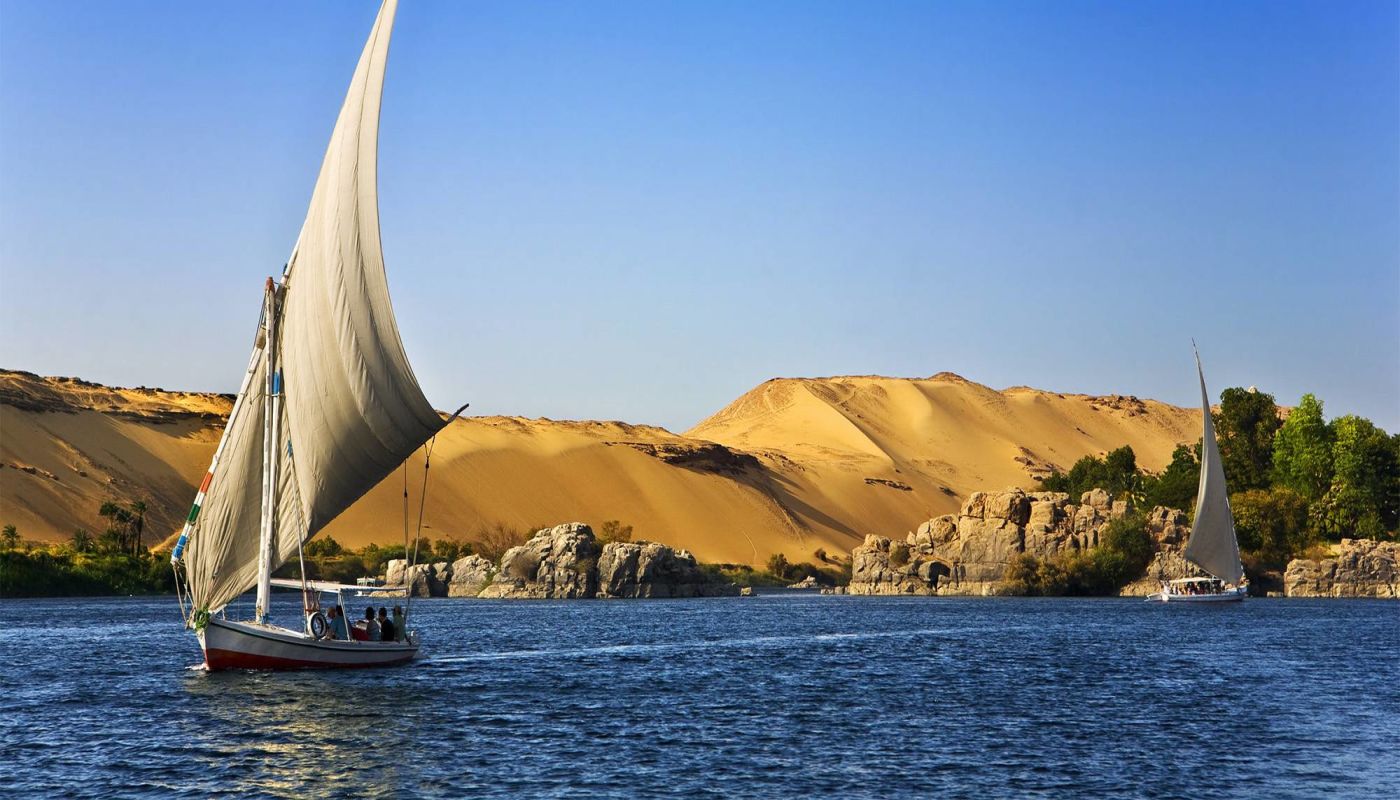
Landscape of Egypt
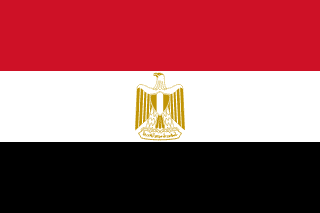
Flag of Egypt

Egypt

Africa

Located in North Africa, Egypt is the third most populous country in Africa, with a population of over 100 million people. The country's geography is dominated by the Nile River, which has been a vital source of life and commerce for thousands of years. Egypt is also home to numerous other natural wonders, including the Red Sea, the Sinai Peninsula, and the Sahara Desert. The country has been working towards a sustainable and inclusive economy, which has resulted in significant improvements in job creation, infrastructure, and foreign investment. Additionally, the government has been investing heavily in healthcare, leading to improved health outcomes and life expectancy. Egypt has also been working towards improving its education system, which has resulted in higher literacy rates and increased access to quality education. Egypt's stunning landscapes, vibrant society, and promising developments make it a truly remarkable country .

What would you like to learn about in Egypt?

Select a section to explore the country where nonprofits are creating positive change.

About Egypt

The regularity and richness of the annual Nile River flood, coupled with semi-isolation provided by deserts to the east and west, allowed for the development of one of the world's great civilizations. A unified kingdom arose circa 3200 B.C., and a series of dynasties ruled in Egypt for the next three millennia. The last native dynasty fell to the Persians in 341 B.C., who in turn were replaced by the Greeks, Romans, and Byzantines. It was the Arabs who introduced Islam and the Arabic language in the 7th century and who ruled for the next six centuries. A local military caste, the Mamluks took control about 1250 and continued to govern after the conquest of Egypt by the Ottoman Turks in 1517. Completion of the Suez Canal in 1869 elevated Egypt as an important world transportation hub. Ostensibly to protect its investments, Britain seized control of Egypt's government in 1882, but nominal allegiance to the Ottoman Empire continued until 1914. Partially independent from the UK in 1922, Egypt acquired full sovereignty from Britain in 1952. The completion of the Aswan High Dam in 1971 and the resultant Lake Nasser have altered the time-honored place of the Nile River in the agriculture and ecology of Egypt. A rapidly growing population (the largest in the Arab world), limited arable land, and dependence on the Nile all continue to overtax resources and stress society. The government has struggled to meet the demands of Egypt's population through economic reform and massive investment in communications and physical infrastructure. Inspired by the 2010 Tunisian revolution, Egyptian opposition groups led demonstrations and labor strikes countrywide, culminating in President Hosni MUBARAK's ouster. Egypt's military assumed national leadership until a new parliament was in place in early 2012. That same year, Mohammed MURSI won the presidential election and a new constitution was affirmed. In July 2013, the military ousted MURSI and he was replaced by interim president Adly MANSOUR.

Quick Facts

Population
85,294,388 (July 2013 est.)
Area
1,001,450 sq km
ISO Code
EG
Continent
Africa
Government
republic
Active Causes
12
View all countries in Africa

Geography & Environment

Climate

desert; hot, dry summers with moderate winters

Terrain

vast desert plateau interrupted by Nile valley and delta

Natural Resources

petroleum, natural gas, iron ore, phosphates, manganese, limestone, gypsum, talc, asbestos, lead, rare earth elements, zinc

Environmental Issues

agricultural land being lost to urbanization and windblown sands; increasing soil salination below Aswan High Dam; desertification; oil pollution threatening coral reefs, beaches, and marine habitats;...

People & Society

73.19 years
Avg. Life Expectancy
73.9%
Literacy Rate
43.5% of total population (2011)
Total Urban Population

Languages

Arabic (official), English and French widely understood by educated classes

Religions

Muslim (mostly Sunni) 90%, Coptic 9%, other Christian 1%

Health Expenditure

4.7% of GDP (2010) of GDP

Education Expenditure

3.8% of GDP (2008) of GDP

Economy

$6,700
GDP per Capita (PPP)
13.5%
Unemployment Rate
20% (2005 est.)
Below Poverty Line

Economic Overview

Occupying the northeast corner of the African continent, Egypt is bisected by the highly fertile Nile valley, where most economic activity takes place. Egypt's economy was highly centralized during the rule of former President Gamal Abdel NASSER but opened up considerably under former Presidents Anwar EL-SADAT and Mohamed Hosni MUBARAK. Cairo from 2004 to 2008 aggressively pursued economic reforms to attract foreign investment and facilitate GDP growth. Despite the relatively high levels of economic growth in recent years, living conditions for the average Egyptian remained poor and contribute...

Causes in Egypt

Environment

Egypt, a country located in North Africa, faces various environmental challenges that significantly impact its population and economy. One of the most pressing issues is water scarcity, with the Nile River being the primary source of water for the country. Rapid population growth, climate change, and inefficient water management practices have contributed to a situation where Egypt is facing a severe water crisis. Furthermore, air pollution in major cities such as Cairo poses serious health risks to its residents, leading to respiratory diseases and other health issues. Desertification is another major concern, with large areas of arable land turning into barren desert due to unsustainable agricultural practices and climate change. Addressing these environmental challenges is crucial for Egypt's sustainable development and the well-being of its people.

Family

In Egypt, family plays a central role in shaping societal norms and values. The concept of family extends beyond the nuclear unit to include extended family members. The tight-knit nature of Egyptian families fosters a strong sense of community and support. Family gatherings and celebrations are significant events where bonds are reinforced and traditions are upheld. In Egypt, family is not only seen as a source of emotional support but also as a pillar of social stability. However, the emphasis on family can also lead to challenges such as generational conflicts and pressure to conform to traditional roles and expectations.

Human Rights

Egypt has a complex history with regard to human rights, facing challenges in upholding fundamental freedoms and protections for its citizens. In recent years, the Egyptian government has been criticized for its crackdown on dissent, restrictions on freedom of expression and assembly, and widespread reports of arbitrary detention and torture. Human rights organizations have documented cases of enforced disappearances, extrajudicial killings, and unfair trials in the country. These violations not only impact the individuals directly affected but also undermine the rule of law and social cohesion in Egypt. It is crucial for the Egyptian government to address these human rights concerns to ensure the protection and dignity of all its citizens.

Education

Egypt, a country with a rich history and cultural heritage, faces significant challenges in its education system. The impact of education in Egypt is profound, influencing the country's economic development, social mobility, and overall well-being. Despite efforts to improve educational outcomes, Egypt continues to struggle with issues such as high dropout rates, overcrowded classrooms, and a lack of resources. Limited access to quality education perpetuates inequality and hinders the country's progress. Addressing these challenges is crucial for Egypt to unlock its full potential and ensure a brighter future for its citizens.

Poverty

Poverty remains a significant challenge in Egypt, affecting a substantial portion of its population. According to the World Bank, around 32.5% of Egyptians live below the national poverty line, with poverty rates being particularly high in rural areas. The impact of poverty in Egypt extends beyond economic hardship, with implications for healthcare, education, and overall quality of life. Limited access to essential services and resources exacerbates the cycle of poverty, hindering opportunities for social mobility and economic development. Addressing poverty in Egypt requires comprehensive strategies that focus on improving income distribution, enhancing social protection programs, and promoting sustainable economic growth to uplift vulnerable communities across the country.

Religion

Religion holds significant influence in Egypt, a country where Islam is the predominant faith. The majority of Egyptians are Sunni Muslims, with a small Christian minority primarily practicing Coptic Christianity. Religion is deeply interwoven into the fabric of Egyptian society, shaping cultural norms, political dynamics, and everyday life. The coexistence of multiple religious communities in Egypt has at times led to tensions and conflicts, but also fosters a rich tapestry of traditions and beliefs. Religious institutions play a crucial role in providing social services and guidance to the population. Additionally, religious holidays and practices form an integral part of the Egyptian calendar, with festivals and rituals marking important milestones throughout the year. Understanding the intricate relationship between religion and society in Egypt is essential to appreciating the complexities of this historically diverse nation.

Clean Water

Egypt, a country nestled in North Africa and the Middle East, faces significant challenges in ensuring access to clean water for its populace. With a rapidly growing population exceeding 100 million people, Egypt's water resources are under immense pressure. The River Nile serves as the primary source of water for the nation, but it is heavily polluted by industrial waste and agricultural runoff. This contamination poses a severe health risk to Egyptians, leading to waterborne diseases and illnesses. The scarcity of clean water also hampers agricultural productivity and exacerbates food insecurity in the region. Moreover, climate change and urbanization further strain the availability of clean water in Egypt. Addressing these issues requires concerted efforts from the government, non-governmental organizations, and the international community to implement sustainable water management practices and improve water infrastructure across the country.

Economy

The Egyptian economy is a complex system that plays a crucial role in shaping the country's development and overall well-being. With a population of over 100 million people, Egypt faces various economic challenges, including high unemployment rates, income inequality, and poverty. The economy heavily relies on sectors such as tourism, agriculture, and natural gas exports. However, political instability, corruption, and inadequate infrastructure have hindered its growth potential. These challenges have not only impacted the country's economic stability but have also contributed to social unrest and political upheaval in recent years. It is imperative for Egypt to address these issues effectively to ensure sustainable economic growth and improve the living standards of its citizens.

Government

Egypt, a country located in North Africa, has a rich history dating back to ancient civilizations. The government of Egypt plays a significant role in shaping the country's political, social, and economic landscape. The government structure in Egypt is a republic with the President as the head of state and the Prime Minister as the head of government. The government's policies and decisions directly impact the lives of its citizens, influencing areas such as healthcare, education, infrastructure development, and foreign relations. Issues such as political stability, human rights, and economic reforms are crucial factors that affect the well-being of the population. It is essential for the government to address these issues effectively to ensure the prosperity and stability of Egypt.

Health

In Egypt, health plays a crucial role in shaping the well-being and quality of life of its population. The country faces various health challenges, including high rates of non-communicable diseases such as diabetes, cardiovascular diseases, and obesity. These health issues are often exacerbated by factors such as poor nutrition, inadequate healthcare infrastructure, limited access to clean water and sanitation, and air pollution. Additionally, infectious diseases such as hepatitis C and tuberculosis remain significant public health concerns in Egypt. The impact of these health challenges is far-reaching, affecting individuals' productivity, quality of life, and overall economic development of the country. Addressing these health issues requires a comprehensive approach that involves improving healthcare services, promoting healthy lifestyles, and enhancing public health education and awareness.

Children

Egypt, a country located in the northeastern corner of Africa, faces various challenges that impact its children. One of the key issues affecting children in Egypt is poverty. According to UNICEF, around 26% of Egypt's population lives below the poverty line, which significantly affects children's access to education, healthcare, and basic necessities. Child labor is also a prevalent issue in Egypt, with many children forced to work in hazardous conditions to support their families. Additionally, child marriage remains a concern, with a significant number of girls being married off at a young age, impacting their education and overall well-being. These factors contribute to the cycle of poverty and limit the opportunities for children in Egypt to reach their full potential.

Animals

In Egypt, animals play a significant role in the country's cultural, historical, and economic landscape. Animals such as camels, donkeys, and horses have been utilized for transportation and agriculture for centuries, shaping the way of life for many Egyptians. Cats hold a special place in Egyptian society, revered for their role in ancient Egyptian mythology and cherished as beloved companions. However, despite this cultural significance, animals in Egypt face numerous challenges such as overpopulation, inadequate veterinary care, and limited animal welfare laws. Animal abuse and neglect are prevalent issues that continue to be a concern for animal rights activists and organizations striving to improve the well-being of animals in the country.

Nonprofits Working in Egypt

Discover organizations making a difference in Egypt

GUTTMACHER INSTITUTE INC

GUTTMACHER INSTITUTE INC

Now in its fifth decade, the Guttmacher Institute remains committed to the mission and goals that led to its creation. The Guttmacher Institute was founded in 1968 as the Center for Family Planning Program Development. At the time, Presidents John F. Kennedy, Lyndon Johnson and Richard Nixon had begun to call the public's attention to the problem of unplanned and unwanted childbearing and its consequences for individual women and men, their children and their communities both at home and abroad. Concurrently, the United States Congress was taking its first steps toward the development of an international population assistance program, as well as a multifaceted, national program aimed at providing equitable access to modern methods of birth control in the United States. By integrating nonpartisan social science research, policy analysis and public education, the Center hoped to provide a factual basis for the development of sound governmental policies and for public consideration of the sensitive issues involved in the promotion of reproductive health and rights. This purpose and commitment continue today. The Center was originally housed within the corporate structure of Planned Parenthood Federation of America (PPFA). Its program, however, was independently developed and overseen by a National Advisory Council separate from the PPFA Board of Directors. Its early development was nurtured by Alan F. Guttmacher, an eminent obstetrician-gynecologist, teacher and writer who was PPFA's president for more than a decade until his death in 1974. The Center was renamed in Dr. Guttmacher's memory, and the Guttmacher Institute incorporated as an entirely independent nonprofit policy research institute with its own Board in 1977. The Guttmacher Institute maintains offices in New York and Washington. Its current staff of 81 comprises demographers, social scientists, public policy analysts, editors, writers, communications specialists, and financial and technical personnel. A few of its employees have been with the organization for most of its existence, and an affiliation that goes back 10 or 15 years is not unusual. The Institute's work is guided by a 39-member board made up of eminent professionals from a rich variety of disciplines, as well as civic leaders from across the United States and around the world. The Guttmacher Institute's annual budget of approximately $17 million is derived largely from private foundations, government agencies, multilateral organizations and individual contributions.

New York, New York

Make Your Impact Today

Discover causes you care about and support the nonprofits making a difference in communities around the world.

Are you a nonprofit? Join Project World Impact for free

Join Us Free