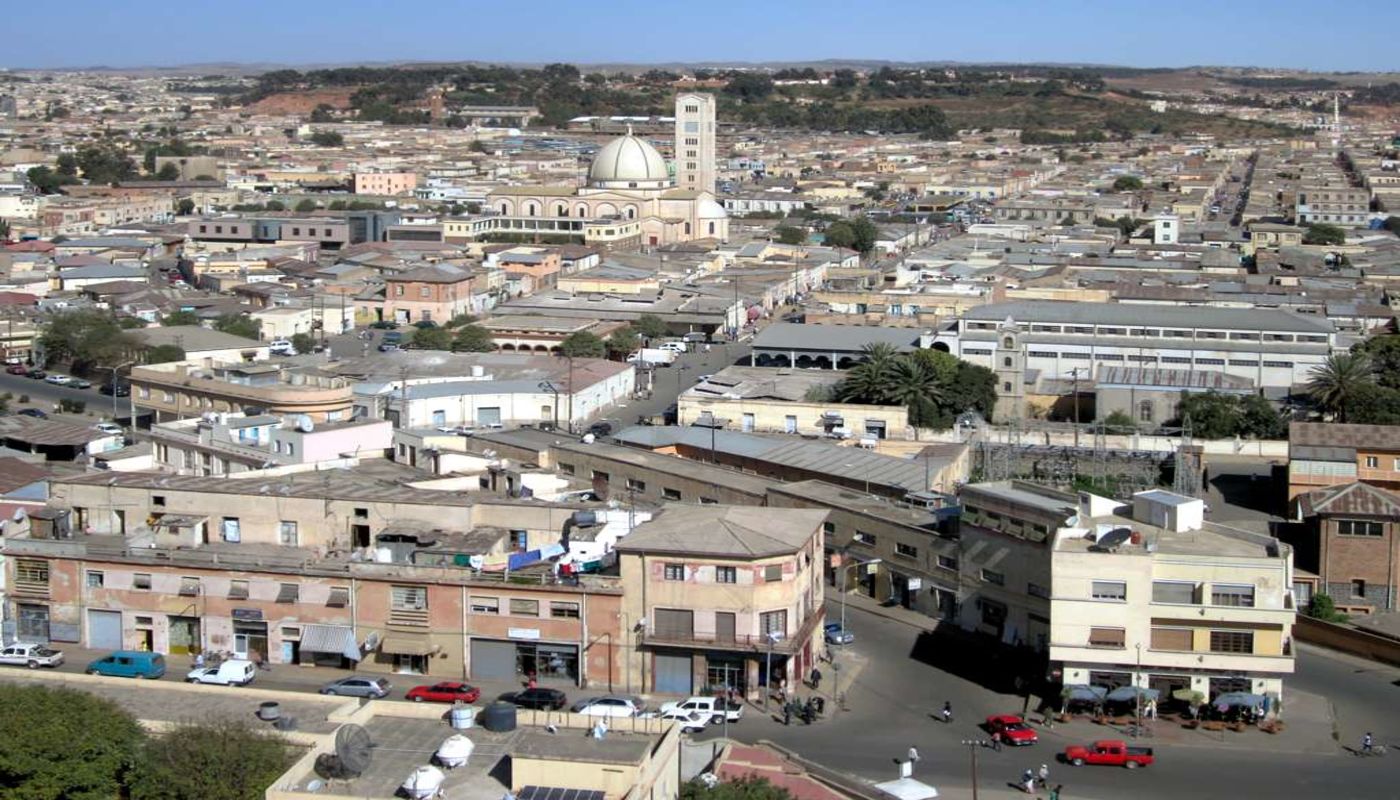
Landscape of Eritrea
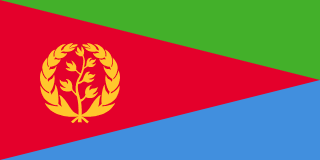
Flag of Eritrea

Eritrea

Africa

Eritrea is located in the Horn of Africa, with a diverse population of over 6 million people. Eritrea has been making positive strides in recent years, including the signing of a historic peace agreement with neighboring Ethiopia in 2018, which has improved regional stability and economic prospects for the country. Additionally, Eritrea has been focusing on strengthening its infrastructure, including investing in roads, ports, and airports. Eritrea is extending efforts to protect its unique cultural heritage, including preserving ancient archaeological sites and promoting traditional arts and crafts. These positive changes have allowed for growth and sustainability as this country continues to develop.

What would you like to learn about in Eritrea?

Select a section to explore the country where nonprofits are creating positive change.

About Eritrea

The UN established Eritrea as an autonomous region within the Ethiopian federation in 1952. Ethiopia's full annexation of Eritrea as a province 10 years later sparked a violent 30-year struggle for independence that ended in 1991 with Eritrean rebels defeating government forces. Eritreans overwhelmingly approved independence in a 1993 referendum. ISAIAS Afworki has been Eritrea's only president since independence; his rule, particularly since 2001, has been highly autocratic and repressive. His government has created a highly militarized society by pursuing an unpopular program of mandatory conscription into national service, sometimes of indefinite length. A two-and-a-half-year border war with Ethiopia that erupted in 1998 ended under UN auspices in December 2000. The Eritrea-Ethiopia Boundary Commission (EEBC) created in April 2003 was tasked "to delimit and demarcate the colonial treaty border based on pertinent colonial treaties (1900, 1902, and 1908) and applicable international law." Eritrea for several years hosted a UN peacekeeping operation that monitored a 25 km-wide Temporary Security Zone. The EEBC on 30 November 2007 remotely demarcated the border, assigning the town of Badme to Eritrea, despite Ethiopia's maintaining forces there from the time of the 1998-2000 war. An increasingly hostile Eritrea insisted that the UN terminate its peacekeeping mission on 31 July 2008. Eritrea has accepted the EEBC's "virtual demarcation" decision and repeatedly called on Ethiopia to remove its troops. Ethiopia has not accepted the demarcation decision, and neither party has entered into meaningful dialogue to resolve the impasse. Eritrea is subject to several UN Security Council Resolutions (from 2009, 2011, and 2012) imposing various military and economic sanctions, in view of evidence that it has supported armed opposition groups in the region.

Quick Facts

Population
6,233,682 (July 2013 est.)
Area
117,600 sq km
ISO Code
ER
Continent
Africa
Government
transitional government
Active Causes
12
View all countries in Africa

Geography & Environment

Climate

hot, dry desert strip along Red Sea coast; cooler and wetter in the central highlands (up to 61 cm of rainfall annually, heaviest June to September); semiarid in western hills and lowlands

Terrain

dominated by extension of Ethiopian north-south trending highlands, descending on the east to a coastal desert plain, on the northwest to hilly terrain and on the southwest to flat-to-rolling plains

Natural Resources

gold, potash, zinc, copper, salt, possibly oil and natural gas, fish

Environmental Issues

deforestation; desertification; soil erosion; overgrazing; loss of infrastructure from civil warfare

People & Society

63.19 years
Avg. Life Expectancy
68.9%
Literacy Rate
21.3% of total population (2011)
Total Urban Population

Languages

Tigrinya (official), Arabic (official), English (official), Tigre, Kunama, Afar, other Cushitic languages

Religions

Muslim, Coptic Christian, Roman Catholic, Protestant

Health Expenditure

2.7% of GDP (2010) of GDP

Education Expenditure

2.1% of GDP (2006) of GDP

Economy

$800
GDP per Capita (PPP)
NA%
Unemployment Rate
50% (2004 est.)
Below Poverty Line

Economic Overview

Since independence from Ethiopia in 1993, Eritrea has faced the economic problems of a small, poor country, facing chronic drought. These have been exacerbated by restrictive economic policies. Eritrea has a command economy under the control of the sole political party, the People's Front for Democracy and Justice (PFDJ). Like the economies of many African nations, a large share of the population - nearly 80% - is engaged in subsistence agriculture. That sector only produces a small share of the country's total output. Since the conclusion of the Ethiopian-Eritrea war in 2000, the government h...

Causes in Eritrea

Environment

Eritrea, a country located in the Horn of Africa, is faced with environmental challenges that significantly impact its population and economy. The country's arid climate and limited water resources have led to issues such as deforestation, soil erosion, and desertification. These environmental problems have had a direct impact on the agricultural sector, which is a vital source of livelihood for many Eritreans. Inadequate rainfall and land degradation have resulted in decreased crop yields, food insecurity, and loss of biodiversity. Furthermore, the lack of access to clean water and proper sanitation facilities poses health risks for the population. Addressing these environmental issues is crucial for sustainable development and the well-being of the people of Eritrea.

Family

In Eritrea, the concept of family holds significant importance, deeply woven into the fabric of society and culture. Families in Eritrea typically encompass not only immediate relatives but also extended family members, forming a strong support network that plays a pivotal role in the lives of individuals. The family unit in Eritrea serves as the cornerstone of social structure, providing emotional, financial, and social support to its members. Moreover, familial ties are crucial in decision-making processes, with elders often holding considerable influence and authority within the family dynamics. This emphasis on family values fosters a sense of unity, solidarity, and interconnectedness among Eritrean communities, shaping their identity and resilience in the face of challenges.

Human Rights

Eritrea, a country located in the Horn of Africa, has long been under scrutiny for its human rights record. The government's strict control over all aspects of Eritrean society has led to widespread reports of human rights abuses, including arbitrary arrests, lack of freedom of speech and expression, and forced labor. The indefinite national service requirement, which conscripts Eritreans into military or government service, has been a major concern, with many individuals being subjected to harsh working conditions and limited freedoms. Additionally, there have been reports of torture and extrajudicial killings by security forces. These human rights violations have had a profound impact on the people of Eritrea, leading to a climate of fear and suppression. It is crucial to raise awareness about these issues and advocate for the protection of human rights in Eritrea to ensure the well-being and dignity of its citizens.

Education

Eritrea, a country located in the Horn of Africa, faces significant challenges in the education sector due to a history of conflict and limited resources. The impact of these challenges is profound, with only 62% of primary school-age children enrolled in school, and a literacy rate of approximately 76%. The lack of educational opportunities not only hinders individual development but also poses obstacles to the country's overall social and economic advancement. Education plays a crucial role in empowering individuals, fostering critical thinking skills, and driving socio-economic progress. By addressing the barriers to education in Eritrea, such as inadequate infrastructure and teacher shortages, the country can work towards a brighter future for its citizens and sustainable development.

Poverty

Eritrea, a country located in the Horn of Africa, faces significant challenges due to high levels of poverty that impact its population. The World Bank estimates that over 60% of Eritreans live below the poverty line, with limited access to basic necessities such as food, clean water, healthcare, and education. The persistent poverty in Eritrea can be attributed to various factors, including years of conflict, political instability, and underdeveloped infrastructure. This dire situation has led to a lack of economic opportunities, widespread food insecurity, and inadequate healthcare services, further exacerbating the cycle of poverty within the country. Addressing the root causes of poverty in Eritrea is crucial to improving the well-being of its citizens and fostering sustainable development in the region.

Religion

In Eritrea, religion plays a significant role in shaping the cultural and social landscape of the country. The majority of Eritreans adhere to Christianity and Islam, with each religion influencing various aspects of daily life, societal norms, and political dynamics. Religious institutions often serve as centers of community cohesion, providing not only spiritual guidance but also playing a role in education, healthcare, and social welfare. However, despite constitutional guarantees of religious freedom, Eritrea has faced criticism for reported human rights abuses targeting religious minorities and restrictions on religious practices. The government's policies have led to concerns regarding religious freedom and have prompted international scrutiny. As Eritrea continues to navigate the intersection of religion and governance, it remains crucial to uphold the principles of tolerance, diversity, and respect for all faith traditions.

Clean Water

Eritrea, a country located in the Horn of Africa, faces significant challenges in accessing clean water. With a population of over 3.5 million people, access to safe drinking water remains a critical issue. The lack of clean water sources has severe consequences on public health, leading to waterborne diseases such as cholera and typhoid fever. Furthermore, inadequate access to clean water also hinders agricultural productivity, exacerbating food insecurity in the region. Addressing the issue of clean water in Eritrea requires concerted efforts from both the government and international organizations to improve infrastructure, promote water conservation practices, and ensure sustainable access to safe drinking water for all its citizens.

Economy

Eritrea, a country in the Horn of Africa, has faced significant economic challenges that have had a profound impact on its population. The economy of Eritrea is primarily based on agriculture, with over 80% of the population engaged in subsistence farming. However, recurrent droughts and limited access to modern agricultural techniques have hindered agricultural productivity, leading to food insecurity and poverty among its people. Moreover, Eritrea has a centrally planned economy with state control over most economic activities, which has resulted in limited private sector development and foreign investment. As a result, the country struggles with high unemployment rates and a lack of economic opportunities for its citizens, contributing to widespread poverty and emigration. The economic challenges facing Eritrea have not only impacted the livelihoods of its people but also hindered the country's overall development and stability.

Government

Eritrea, a country located in the Horn of Africa, has faced significant challenges due to its government's policies and practices. The government in Eritrea is known for its authoritarian rule, suppression of political dissent, and severe restrictions on freedom of expression and press. These factors have led to widespread human rights abuses, including arbitrary arrests, forced labor, and lack of access to basic services. The government's impact on the country has also resulted in a high level of emigration, with many Eritreans fleeing the country in search of better opportunities and safety. The economy has been greatly affected by government control and mismanagement, leading to high unemployment rates and limited economic growth. It is crucial to raise awareness about the situation in Eritrea to advocate for positive change and support the people of Eritrea in their pursuit of freedom and prosperity.

Health

Eritrea, a country located in the Horn of Africa, faces significant health challenges that impact its population. The nation grapples with high rates of infectious diseases such as malaria, tuberculosis, and HIV/AIDS, which pose a considerable threat to public health. Limited access to clean water and sanitation facilities further exacerbates health issues, leading to the spread of preventable illnesses. Maternal and child health outcomes are also a concern in Eritrea, as maternal mortality rates remain high, and malnutrition among children is prevalent. Additionally, a lack of healthcare infrastructure and medical resources hinders the delivery of quality healthcare services to the population. Addressing these health challenges is crucial to improving the well-being of Eritrean citizens and fostering sustainable development in the country.

Children

Eritrea, a country located in the Horn of Africa, faces numerous challenges that impact its children. Children in Eritrea often experience barriers to education, healthcare, and protection from child labor. The prolonged military conscription in Eritrea can disrupt children's education and expose them to unsafe working conditions. Additionally, limited access to clean water and sanitation facilities poses a threat to the health and well-being of children in the country. These challenges highlight the importance of addressing the needs of children in Eritrea to ensure their rights are protected and their well-being is prioritized.

Animals

Eritrea, a country located in the Horn of Africa, is home to a diverse range of wildlife that plays a crucial role in its ecosystem. The animals in Eritrea, such as the African elephant, the Nubian ibex, and the African wild dog, are not only essential for maintaining biodiversity but also contribute significantly to the country's economy through ecotourism. However, like many countries around the world, Eritrea faces various challenges that threaten its wildlife, including habitat loss, poaching, and climate change. These factors have led to a decline in animal populations and have put many species at risk of extinction. It is crucial for Eritrea to prioritize conservation efforts and implement sustainable practices to protect its wildlife and ensure their survival for future generations.

Nonprofits Working in Eritrea

Discover organizations making a difference in Eritrea

Make Your Impact Today

Discover causes you care about and support the nonprofits making a difference in communities around the world.

Are you a nonprofit? Join Project World Impact for free

Join Us Free