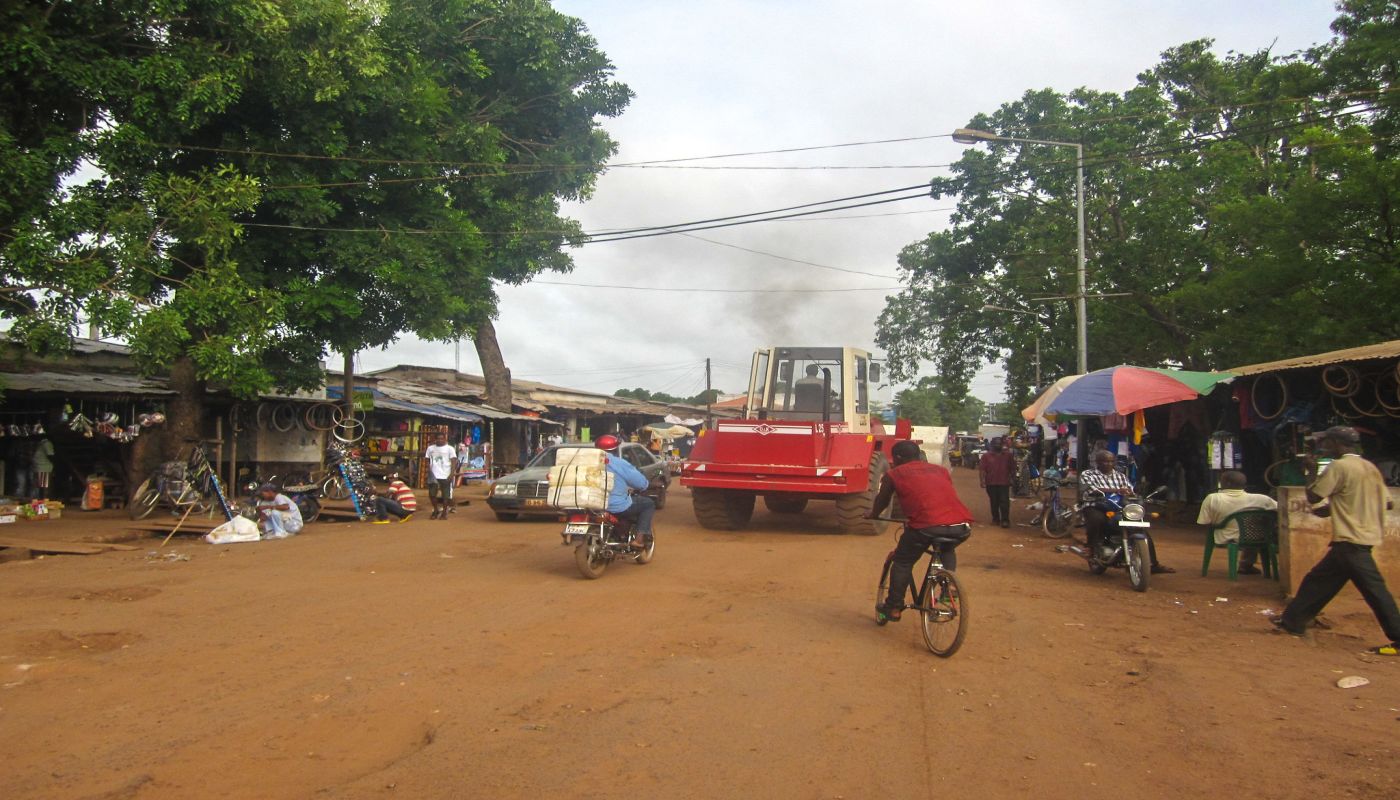
Landscape of Guinea-Bissau
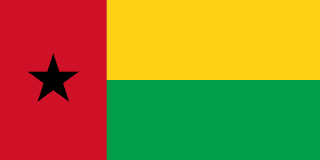
Flag of Guinea-Bissau

Guinea-Bissau

Africa

Despite being one of the smallest countries in Africa, Guinea-Bissau is home to a diverse population of approximately 2.3 million people. The government is actively working towards improving education, healthcare, and access to basic amenities, which are essential for the well-being of its citizens. In addition, the government has taken measures to combat drug trafficking and corruption, which have been major challenges in the past. Guinea-Bissau has a diverse geography that includes a tropical coastline, savannas, and forests.

What would you like to learn about in Guinea-Bissau?

Select a section to explore the country where nonprofits are creating positive change.

About Guinea-Bissau

Since independence from Portugal in 1974, Guinea-Bissau has experienced considerable political and military upheaval. In 1980, a military coup established authoritarian dictator Joao Bernardo 'Nino' VIEIRA as president. Despite setting a path to a market economy and multiparty system, VIEIRA's regime was characterized by the suppression of political opposition and the purging of political rivals. Several coup attempts through the 1980s and early 1990s failed to unseat him. In 1994 VIEIRA was elected president in the country's first free elections. A military mutiny and resulting civil war in 1998 eventually led to VIEIRA's ouster in May 1999. In February 2000, a transitional government turned over power to opposition leader Kumba YALA after he was elected president in transparent polling. In September 2003, after only three years in office, YALA was overthrown in a bloodless military coup, and businessman Henrique ROSA was sworn in as interim president. In 2005, former President VIEIRA was re-elected president pledging to pursue economic development and national reconciliation; he was assassinated in March 2009. Malam Bacai SANHA was elected in an emergency election held in June 2009, but he passed away in January 2012 from an existing illness. A military coup in April 2012 prevented Guinea-Bissau's second-round presidential election - to determine SANHA's successor - from taking place.

Quick Facts

Population
1,660,870 (July 2013 est.)
Area
36,125 sq km
ISO Code
GW
Continent
Africa
Government
republic
Active Causes
12
View all countries in Africa

Geography & Environment

Climate

tropical; generally hot and humid; monsoonal-type rainy season (June to November) with southwesterly winds; dry season (December to May) with northeasterly harmattan winds

Terrain

mostly low coastal plain rising to savanna in east

Natural Resources

fish, timber, phosphates, bauxite, clay, granite, limestone, unexploited deposits of petroleum

Environmental Issues

deforestation; soil erosion; overgrazing; overfishing

People & Society

49.5 years
Avg. Life Expectancy
55.3%
Literacy Rate
43.9% of total population (2011)
Total Urban Population

Languages

Portuguese (official), Crioulo, African languages

Religions

Muslim 50%, indigenous beliefs 40%, Christian 10%

Health Expenditure

8.5% of GDP (2010) of GDP

Education Expenditure

NA of GDP

Economy

$1,200
GDP per Capita (PPP)
NA%
Unemployment Rate
NA%
Below Poverty Line

Economic Overview

One of the poorest countries in the world, Guinea-Bissau's legal economy depends mainly on farming and fishing, but trafficking in narcotics is probably the most lucrative trade. The combination of limited economic prospects, a weak and faction-ridden government, and favorable geography have made this West African country a way station for drugs bound for Europe. Cashew crops have increased remarkably in recent years; low rainfall hindered cereals and other crops in 2011. Guinea-Bissau exports fish and seafood along with small amounts of peanuts, palm kernels, and timber. Rice is the major cro...

Causes in Guinea-Bissau

Environment

Guinea-Bissau, a West African country, is significantly affected by environmental challenges. The country's economy heavily relies on agriculture and fishing, making it particularly vulnerable to climate change impacts such as erratic rainfall patterns, rising sea levels, and increased frequency of extreme weather events. Deforestation, soil erosion, and pollution further exacerbate the environmental issues faced by Guinea-Bissau. These factors not only threaten the country's biodiversity but also jeopardize the livelihoods of its population, many of whom depend on natural resources for sustenance and income. Urgent action is required to address these environmental issues and safeguard the well-being of Guinea-Bissau's people and ecosystems.

Family

In Guinea-Bissau, family plays a central role in the social fabric of the country, influencing various aspects of life including education, healthcare, and economic stability. The concept of family extends beyond immediate relatives to include extended family members, creating a strong support system for individuals. Within this familial structure, responsibilities are shared among family members, with older generations often providing guidance and support to younger ones. Additionally, family gatherings and events serve as a means of maintaining cultural traditions and strengthening community bonds. However, despite the positive impact of family ties in Guinea-Bissau, challenges such as poverty, political instability, and limited access to resources can strain familial relationships and hinder the well-being of individuals and communities.

Human Rights

Guinea-Bissau, a West African country with a complex history of political instability and poverty, faces significant challenges in upholding human rights. The country has been plagued by issues such as corruption, lack of access to healthcare and education, and political unrest, all of which have direct implications on the human rights of its citizens. Human rights violations in Guinea-Bissau include arbitrary arrests, restrictions on freedom of expression and assembly, and gender-based violence. These violations not only undermine the dignity and well-being of the population but also hinder the country's overall development and stability. It is essential for both national authorities and the international community to work together to address these human rights concerns and ensure the protection and promotion of fundamental rights for all individuals in Guinea-Bissau.

Education

Guinea-Bissau, a West African country, faces numerous challenges in its development, with education being a key factor influencing its progress. The nation struggles with high illiteracy rates, limited access to quality education, and a lack of resources for schools. These issues have profound implications for Guinea-Bissau's socio-economic growth, as a well-educated population is crucial for sustainable development and poverty reduction. Education empowers individuals, enhances their skills and knowledge, and opens up opportunities for better livelihoods. By investing in education, Guinea-Bissau can break the cycle of poverty, improve healthcare outcomes, and foster a more prosperous future for its citizens.

Poverty

Guinea-Bissau, a West African nation, grapples with pervasive poverty that significantly impacts its population and overall development. With nearly 67% of the population living below the poverty line, access to basic necessities such as clean water, healthcare, and education remains limited. Poverty in Guinea-Bissau is exacerbated by factors such as political instability, corruption, weak infrastructure, and a heavy reliance on agriculture, which is vulnerable to climate change. The lack of economic opportunities and social services perpetuates a cycle of poverty, hindering the country's progress towards sustainable development. Addressing poverty in Guinea-Bissau requires comprehensive strategies that focus on improving governance, promoting economic diversification, and enhancing social welfare programs to uplift its citizens from dire living conditions.

Religion

Religion in Guinea-Bissau is a significant aspect of the country's culture and society. Islam is the dominant religion, practiced by approximately 45% of the population, followed by Christianity and indigenous beliefs. Religious practices and beliefs play a crucial role in shaping societal norms, values, and traditions in Guinea-Bissau. Despite the diverse religious landscape, the country has a history of religious tolerance and coexistence among different faith communities. However, religious tensions can arise due to socio-political factors, such as competition for resources and power. It is essential to understand the impact of religion in Guinea-Bissau to promote interfaith dialogue and peaceful coexistence among its diverse population.

Clean Water

Guinea-Bissau, a small West African nation, faces significant challenges in ensuring access to clean water for its population. With only 39% of people having access to basic sanitation facilities and 64% lacking access to clean drinking water, the country grapples with waterborne diseases such as cholera, typhoid, and diarrhea, which contribute to high mortality rates, particularly among children under the age of five. The lack of clean water not only threatens public health but also hinders socio-economic development, as communities spend valuable time collecting water from distant sources instead of engaging in productive activities. Addressing the issue of clean water in Guinea-Bissau requires concerted efforts from the government, NGOs, and international partners to invest in infrastructure, education, and sustainable water management practices.

Economy

The economy of Guinea-Bissau, a West African country, faces significant challenges that profoundly impact its population. With a heavy reliance on agriculture, particularly cashew nuts, the country's economy is vulnerable to external factors such as market fluctuations and climate change. Political instability and corruption have hindered economic development and foreign investment, exacerbating poverty and unemployment rates. The lack of infrastructure and limited access to education and healthcare further perpetuate the economic struggles faced by the people of Guinea-Bissau. Addressing these issues is crucial for sustainable growth and improved livelihoods in the country.

Government

Guinea-Bissau, a small West African nation, faces numerous challenges that are significantly influenced by its government. The country has a history of political instability, corruption, and weak governance, which hinder its development and well-being of its citizens. The lack of effective governance has led to economic struggles, social unrest, and limited access to basic services such as healthcare and education. The government's inability to provide a stable environment for businesses has hampered economic growth and perpetuated poverty in the country. Additionally, political instability has fueled drug trafficking and organized crime, further undermining the rule of law and threatening the security of the nation. Addressing these governance issues is crucial for Guinea-Bissau to achieve sustainable development and improve the lives of its people.

Health

Guinea-Bissau, a small West African country, faces significant health challenges that profoundly impact its population. With a high prevalence of infectious diseases such as malaria, tuberculosis, and HIV/AIDS, the healthcare system in Guinea-Bissau struggles to provide adequate care to its citizens. Limited access to clean water and sanitation facilities further exacerbates health issues, leading to high rates of malnutrition and infant mortality. The lack of resources and infrastructure hinders the delivery of essential healthcare services, contributing to poor health outcomes for many in the country. Addressing these health challenges is crucial to improving the well-being and quality of life for the people of Guinea-Bissau.

Children

Guinea-Bissau, a small West African nation, faces numerous challenges that impact its children. High rates of poverty, limited access to education, and inadequate healthcare services all contribute to the vulnerability of children in this country. According to UNICEF, nearly 67% of the population in Guinea-Bissau lives below the poverty line, leading to malnutrition and poor living conditions for many children. Furthermore, only around 50% of children attend primary school, with even lower rates for secondary education. The lack of educational opportunities perpetuates the cycle of poverty and limits the future prospects of children in Guinea-Bissau. Additionally, inadequate healthcare infrastructure results in high child mortality rates, with preventable diseases claiming many young lives. Addressing these issues is crucial to improving the well-being and future prospects of children in Guinea-Bissau.

Animals

Guinea-Bissau, a West African nation known for its rich biodiversity, is home to a wide variety of animal species that play a crucial role in its ecosystem. The country's wildlife, including elephants, chimpanzees, and hippos, face numerous threats such as habitat loss, poaching, and illegal wildlife trade. These challenges not only endanger the survival of these animals but also have far-reaching consequences for the environment and local communities that depend on them for sustenance and ecotourism. By raising awareness about the importance of protecting Guinea-Bissau's wildlife and implementing conservation measures, we can help safeguard these precious species for future generations.

Nonprofits Working in Guinea-Bissau

Discover organizations making a difference in Guinea-Bissau

Make Your Impact Today

Discover causes you care about and support the nonprofits making a difference in communities around the world.

Are you a nonprofit? Join Project World Impact for free

Join Us Free