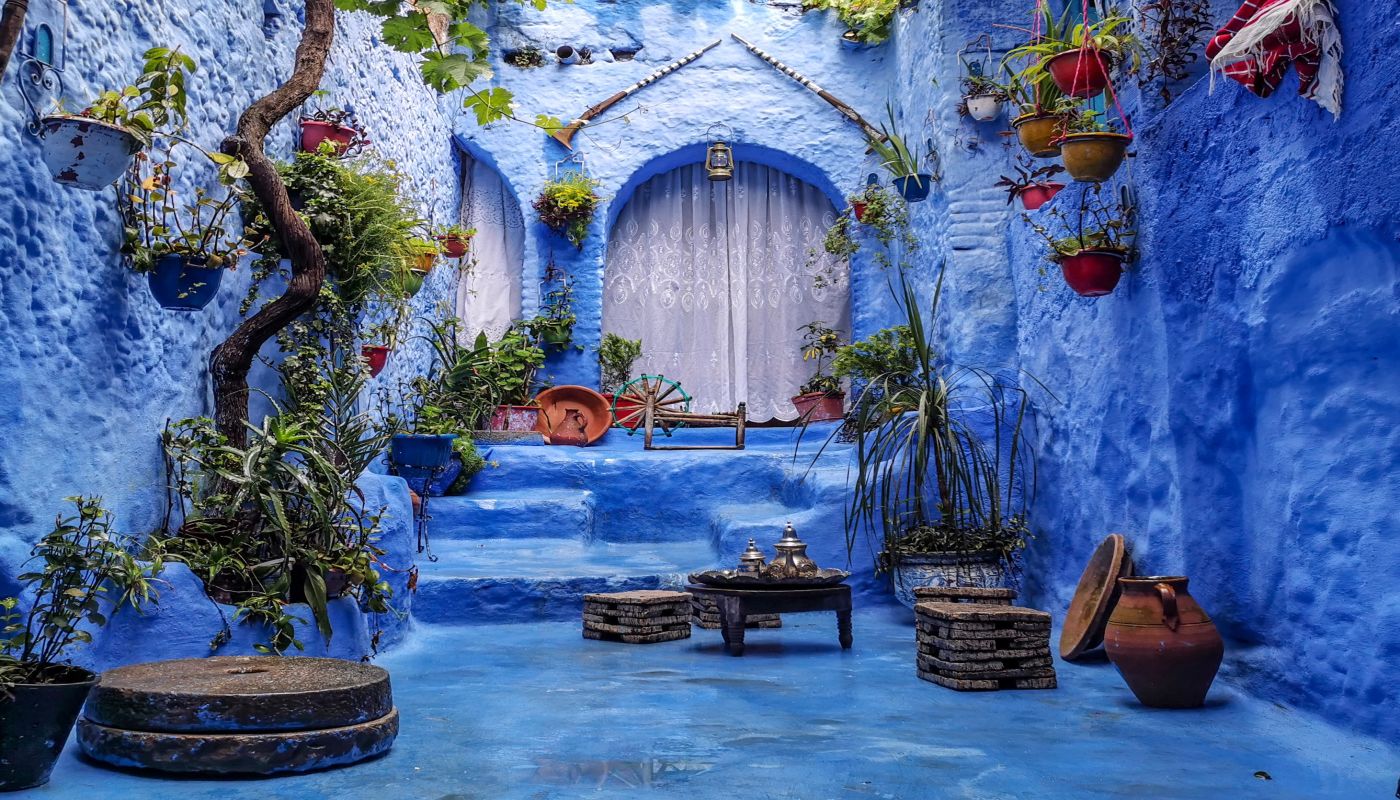
Landscape of Morocco
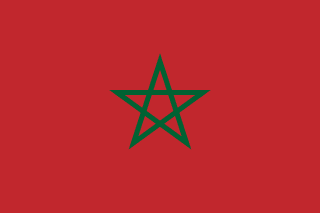
Flag of Morocco

Morocco

Africa

Morocco is a diverse and culturally rich country located in North Africa, known for its stunning landscapes, historic cities, and vibrant souks. With a population of over 37 million people, Morocco is a developing country that has made significant progress in areas such as healthcare, education, and infrastructure. The country's economy is based on agriculture, manufacturing, and tourism.

What would you like to learn about in Morocco?

Select a section to explore the country where nonprofits are creating positive change.

About Morocco

In 788, about a century after the Arab conquest of North Africa, a series of Moroccan Muslim dynasties began to rule in Morocco. In the 16th century, the Sa'adi monarchy, particularly under Ahmad al-MANSUR (1578-1603), repelled foreign invaders and inaugurated a golden age. The Alaouite dynasty, to which the current Moroccan royal family belongs, dates from the 17th century. In 1860, Spain occupied northern Morocco and ushered in a half century of trade rivalry among European powers that saw Morocco's sovereignty steadily erode; in 1912, the French imposed a protectorate over the country. A protracted independence struggle with France ended successfully in 1956. The internationalized city of Tangier and most Spanish possessions were turned over to the new country that same year. Sultan MOHAMMED V, the current monarch's grandfather, organized the new state as a constitutional monarchy and in 1957 assumed the title of king. Although Morocco is not the UN-recognized Administering Power for the Western Sahara, it exercises de facto administrative control there. The UN assists with direct negotiations between Morocco and the Polisario Front, but the status of the territory remains unresolved. Gradual political reforms in the 1990s resulted in the establishment of a bicameral legislature, which first met in 1997. Morocco enjoys a moderately free press, but the government has taken action against journalists who they perceive to be challenging the monarchy, Islam, or the status of Western Sahara. Influenced by protests elsewhere in the region, in February 2011 thousands of Moroccans began weekly rallies in multiple cities across the country to demand greater democracy and end to government corruption. Overall the response of Moroccan security forces was subdued compared to the violence elsewhere in the region. King MOHAMMED VI responded quickly with a reform program that included a new constitution and early elections. The constitution was passed by popular referendum in July 2011; some new powers were extended to parliament and the prime minister, but ultimate authority remains in the hands of the monarch. In early elections in November 2012, the Justice and Development Party - a moderate Islamist party, won the largest number of seats, becoming the first Islamist party to lead the Moroccan Government. In January 2012, Morocco assumed a nonpermanent seat on the UN Security Council for the 2012-13 term.

Quick Facts

Population
32,649,130 (July 2013 est.)
Area
446,550 sq km
ISO Code
MA
Continent
Africa
Government
constitutional monarchy
Active Causes
12
View all countries in Africa

Geography & Environment

Climate

Mediterranean, becoming more extreme in the interior

Terrain

northern coast and interior are mountainous with large areas of bordering plateaus, intermontane valleys, and rich coastal plains

Natural Resources

phosphates, iron ore, manganese, lead, zinc, fish, salt

Environmental Issues

land degradation/desertification (soil erosion resulting from farming of marginal areas, overgrazing, destruction of vegetation); water supplies contaminated by raw sewage; siltation of reservoirs; oi...

People & Society

76.31 years
Avg. Life Expectancy
67.1%
Literacy Rate
57% of total population (2011)
Total Urban Population

Languages

Arabic (official), Berber languages (Tamazight (official), Tachelhit, Tarifit), French (often the language of business, government, and diplomacy)

Religions

Muslim 99% (official), Christian 1%, Jewish about 6,000

Health Expenditure

5.2% of GDP (2010) of GDP

Education Expenditure

5.4% of GDP (2009) of GDP

Economy

$5,400
GDP per Capita (PPP)
9%
Unemployment Rate
15% (2007 est.)
Below Poverty Line

Economic Overview

Morocco has capitalized on its proximity to Europe and relatively low labor costs to build a diverse, open, market-oriented economy. In the 1980s Morocco was a heavily indebted country before pursuing austerity measures and pro-market reforms, overseen by the IMF. Since taking the throne in 1999, King MOHAMMED VI has presided over a stable economy marked by steady growth, low inflation, and gradually falling unemployment, although a poor harvest and economic difficulties in Europe contributed to an economic slowdown in 2012. Industrial development strategies and infrastructure improvements - m...

Causes in Morocco

Environment

Morocco, a country situated in North Africa, is known for its diverse landscapes ranging from mountains to deserts to coastline. The environment plays a crucial role in shaping the lives of Moroccans, impacting various aspects of their daily activities and overall well-being. The degradation of natural resources, such as soil erosion and water scarcity, poses significant challenges to agriculture, which is a key sector in the country's economy. Additionally, increasing temperatures and irregular rainfall patterns due to climate change are affecting food security and exacerbating poverty in rural areas. Furthermore, rapid urbanization and industrialization have led to air and water pollution, posing health risks to the population. It is imperative for Morocco to prioritize sustainable environmental practices to safeguard its natural resources and mitigate the adverse effects of environmental degradation on its society.

Family

In Morocco, family plays a central role in shaping social structure, values, and traditions. Family is considered the cornerstone of Moroccan society, with strong emphasis placed on close-knit familial ties. The concept of family extends beyond the nuclear unit to include extended family members, creating a network of support and solidarity. Families in Morocco typically live in multigenerational households, where elders are revered for their wisdom and experience, and children are cherished as the future caretakers of the family legacy. The interdependence among family members fosters a sense of community and collective responsibility, with families often coming together to celebrate important milestones and provide assistance during times of need. Furthermore, family gatherings are a common occurrence in Moroccan culture, reinforcing bonds and maintaining traditions passed down through generations. By exploring the profound impact of family dynamics in Morocco, we can gain a deeper understanding of the country's rich cultural heritage and the values that shape its society.

Human Rights

Morocco, situated in North Africa, faces various human rights challenges that impact its citizens. The country has made progress in some areas, such as reforms to protect women's rights and combat child labor. However, issues persist related to freedom of expression, arbitrary arrests, and limitations on the rights of minority groups. The government has faced criticism for its treatment of journalists, activists, and protesters. Furthermore, discrimination against the LGBTQ+ community and restrictions on freedom of religion remain pressing concerns. Human rights violations in Morocco hinder the country's social development and stability. By addressing these issues and promoting respect for human rights, Morocco can work towards a more inclusive and equitable society.

Education

In Morocco, education plays a vital role in shaping the country's social and economic landscape. Despite progress in recent years, challenges such as high dropout rates, lack of access to quality education in rural areas, and disparities between urban and rural areas persist. The impact of these challenges is substantial, affecting the country's human capital development, economic growth, and overall societal well-being. Improving educational opportunities for all Moroccans is crucial for fostering a more inclusive society and driving sustainable development. By investing in education, Morocco can empower its citizens, reduce poverty, and enhance its global competitiveness.

Poverty

Morocco, a country located in North Africa, is characterized by a diverse cultural heritage and stunning landscapes. However, poverty remains a significant challenge, affecting a substantial portion of its population. The impact of poverty in Morocco is widespread, with issues such as limited access to education, healthcare, and employment opportunities contributing to the cycle of deprivation. According to the World Bank, around 19% of Moroccans live below the national poverty line, with rural areas experiencing higher poverty rates than urban centers. This disparity exacerbates social inequalities and hinders overall economic development in the country. Addressing the root causes of poverty in Morocco requires targeted interventions that focus on improving access to basic services, promoting sustainable livelihoods, and fostering inclusive growth strategies.

Religion

Religion plays a significant role in the cultural fabric of Morocco, a country located in North Africa. Islam, specifically Sunni Islam, is the predominant religion in Morocco, shaping many aspects of daily life and societal norms. The influence of religion can be seen in various facets of Moroccan society, including politics, education, and social interactions. Mosques are central gathering places for both religious worship and community events, serving as focal points for spiritual and communal activities. The observance of Islamic traditions and rituals is deeply ingrained in Moroccan culture, influencing customs related to marriage, food, clothing, and holidays. While Islam is the state religion of Morocco, the country also upholds a tradition of religious tolerance, with a diverse population that includes minority Jewish and Christian communities. Understanding the impact of religion in Morocco is essential for appreciating the country's rich cultural heritage and fostering intercultural dialogue.

Clean Water

Morocco, a North African country known for its diverse landscapes and rich cultural heritage, faces significant challenges in ensuring access to clean water for its population. With water scarcity being a pressing issue in the country, the lack of clean water poses a serious threat to public health, particularly in rural areas where access to safe drinking water is limited. The scarcity of clean water sources has led to an increased risk of waterborne diseases, malnutrition, and overall poor quality of life for many Moroccans. Furthermore, the impact of climate change exacerbates these challenges, affecting water availability and quality. Efforts are being made by the government and various organizations to improve water infrastructure, increase access to clean water, and promote water conservation practices to safeguard the well-being of the population and sustain the environment.

Economy

Morocco, a North African country known for its rich history and diverse culture, is heavily influenced by its economy. The economy of Morocco is characterized by a mix of traditional agriculture, modern industry, and a growing service sector. The country faces challenges such as high unemployment rates, income inequality, and poverty, which have significant impacts on its population. The economic conditions in Morocco have a direct influence on various aspects of society, including access to education, healthcare, and overall quality of life. Efforts are being made by the government and various organizations to address these issues and promote economic growth and stability in the country.

Government

Morocco, a North African country known for its rich history and diverse culture, is deeply influenced by its government's policies and decisions. The Moroccan government plays a significant role in shaping the country's economic, political, and social landscape. With a constitutional monarchy in place, the government's actions impact various aspects of Moroccan society, including education, healthcare, infrastructure development, and foreign relations. The government's policies on trade, investment, and development have a direct effect on the country's economic growth and stability. Furthermore, government initiatives aimed at promoting sustainability and renewable energy sources are crucial in addressing environmental challenges facing Morocco. By understanding the government's role and its impact on Morocco, individuals can better comprehend the country's current state and future prospects.

Health

Morocco faces significant health challenges that impact its population and overall development. With a population of over 36 million, the country struggles with access to quality healthcare services, particularly in rural areas where infrastructure and resources are limited. Non-communicable diseases such as cardiovascular diseases, diabetes, and cancer are on the rise, posing a major health threat. Additionally, infectious diseases like tuberculosis and hepatitis remain prevalent in certain regions. Malnutrition is also a concern, especially among children under five years old. These health issues not only affect the well-being of Moroccans but also hinder the country's economic growth and social development. Addressing these challenges requires increased investment in healthcare infrastructure, better access to essential medicines, and improved health education programs.

Children

In Morocco, children face various challenges that impact their well-being and development. One of the main issues affecting children in Morocco is poverty, which affects their access to education, healthcare, and adequate nutrition. According to UNICEF, around 19% of children in Morocco live in poverty, limiting their opportunities for a better future. Child labor is another significant concern, with many children engaged in hazardous work instead of attending school. Additionally, child marriage remains prevalent in some regions of the country, robbing many girls of their right to education and exposing them to health risks associated with early pregnancy. Addressing these issues requires a concerted effort from the government, civil society, and international partners to ensure that every child in Morocco has access to their fundamental rights and a safe environment to grow and thrive.

Animals

In Morocco, animals play a significant role in the country's culture, economy, and environment. Livestock such as sheep, goats, and camels are essential for agriculture and food production, providing sustenance and livelihoods for many Moroccans. Additionally, animals like the Barbary macaque are unique to Morocco and are key to the country's ecotourism industry. Unfortunately, the welfare of animals in Morocco faces challenges such as lack of proper care, overgrazing leading to soil erosion, and illegal wildlife trade threatening endangered species. By raising awareness about the importance of animal welfare and conservation efforts in Morocco, we can help protect the rich biodiversity and promote sustainable practices for future generations.

Nonprofits Working in Morocco

Discover organizations making a difference in Morocco

KENDALL OPTOMETRY MINISTRY INC

ORGANIZATIONAL MISSION STATEMENT With primary emphasis in underdeveloped countries, Kendall Optometry Ministry, Inc. was established in 2003 to spread the Word of our Lord and Savior Jesus Christ. This is accomplished by providing glasses to improve the vision of people living in many underdeveloped countries. These impoverished people can now see to read their Bible, and also improve their standard of living. Kendall Optometry Ministry, Inc (KOM) is a 501-3c non-profit organization formed to provide optical equipment and training to Christian optical mission teams traveling all over the world. The equipment and training is provided at no cost and supplies are provided at a break even price. Teams are responsible for building their own eyeglasses inventory but much assistance (in the form of training and software) is provided by KOM to assist in the building of this inventory. KOM also has a limited supply of barcoded glasses (prescription in barcode) which can be used to quickly build an inventory. A testimonial by the President. (Revised: 9/8/2018) I grew up in a Christian family. My father, M. H. Kendall , was a college professor and head of the religion department at Mars Hill College, Mars Hill, N.C. for nearly 40 years. I worked for 29 years for General Electric Appliances in Louisville, Ky. During the last 4 years I averaged several hundred thousand miles each year on international travel installing computer systems. All of this travel went flawlessly. God blessed me in everything that I did. It was something that I found to be obvious that God had a hand in my work. In July, 1999 I decided I would take one mission trip to Honduras working through an organization called "Baptist Medical Dental Mission International" (BMDMI.ORG). My intent was to "pay back the Lord" with this one mission trip. When I arrived in the village, I asked the team leader what he wanted me to do. He said he had several boxes of used prescription glasses to hand out. These glasses were dirty, broken, and not measured. As you can see in Figure 1 to the left (scroll down a bit), we just set them out on a table and people came by and tried them on until something helped them. I immediately knew this was wrong but it was the best we could do then. I came back from that trip with a God Given passion to do it better. Since 1999 I have gone to Honduras 27 times and Nicaragua 3 times. Each time something would be improved. The use of the autorefractor was introduced into Honduras in 2003 (to see Figure 2 scroll down a bit) and another one into Nicaragua in 2004. A special series of computer programs were developed to manage and build the inventory. You can review these programs at http://eyeglasses-Inventory.com/. Since 2003 of the 51 BMDMI mission teams more than 95% of these teams use the equipment and software developed by Kendall Optometry Ministry, Inc. In 2003 Kendall Optometry Ministry was incorporated as a 501-3c non-profit company. Using donations provided by several churches and individuals this company purchased a set of equipment which could be loaned out to Christian mission teams going all over the world. Later in 2005 a 2nd kit was purchased and in 2006 a 3rd and a 4th kit was purchased. In the beginning of 2007 a 5th kit was purchased. At the end of 2007 a 6th and 7th kit including a Retinomax 3 was purchased. By the end of 2009 the company owned 10 kits. In 2010 the company purchased two more kits. In 2011 the company purchased 1 more kit bringing the total to 13. By 2017 the company had purchased 18 kits. In 2018 KOM purchased kit number 19. See the growth of the company at this link. 2018 is only part of the year on this graph. Other teams will participate. The teams use this equipment to not only allow people to read their Bible but to also to help them improve their standard of living. You can read about some of these teams in the Teams Supported area of this web site. Tell us about your Christian mission team. Let us help you be more effective in your work for the Lord. If you would like our help send an E-Mail to: HollandKendall@kendalloptoministry.org Holland Kendall, President Kendall Optometry Ministry, Inc.

LOUISVILLE, Kentucky

Make Your Impact Today

Discover causes you care about and support the nonprofits making a difference in communities around the world.

Are you a nonprofit? Join Project World Impact for free

Join Us Free