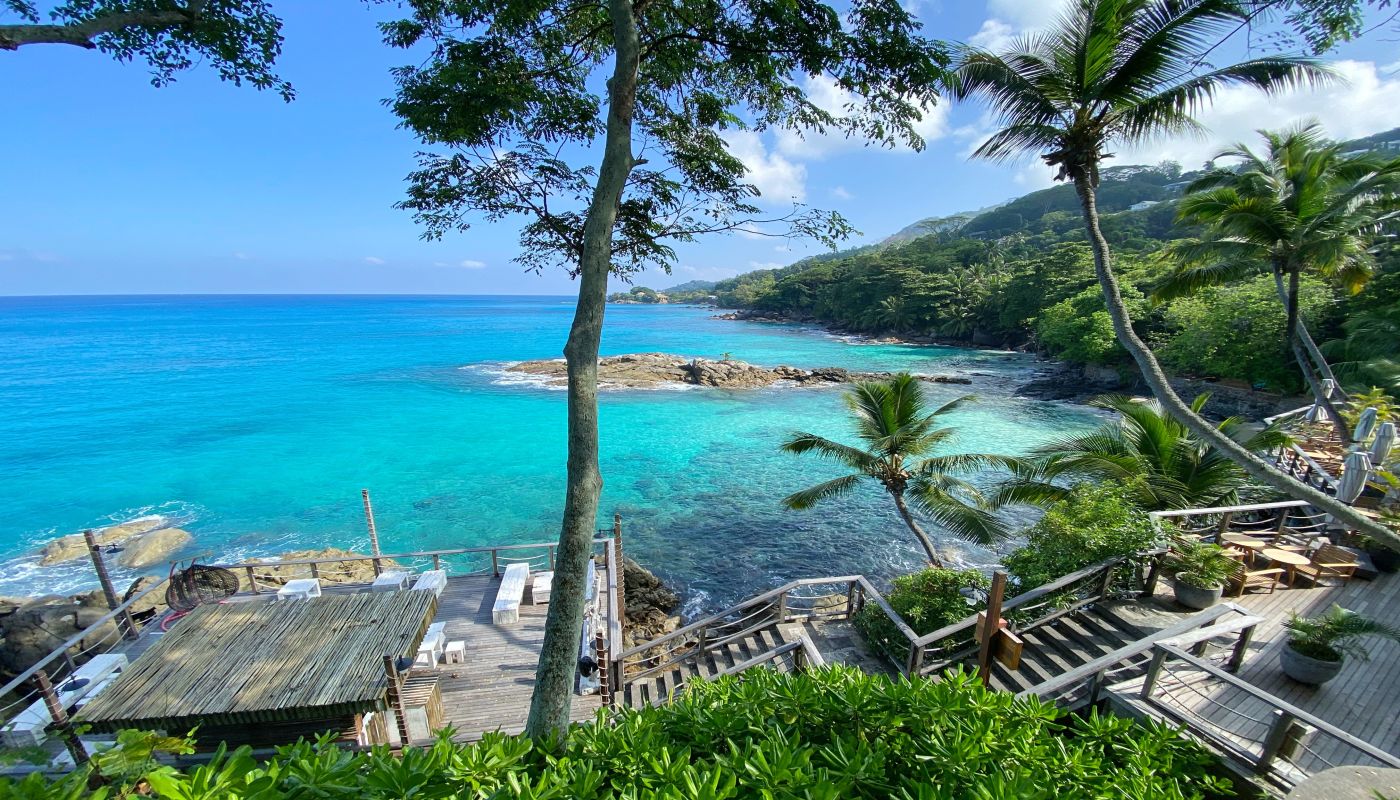
Landscape of Seychelles
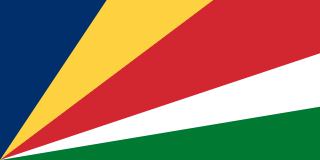
Flag of Seychelles

Seychelles

Africa

With a population of just over 98,000 people, Seychelles is a developing country in the Indian Ocean that has made progress in areas such as healthcare, education, and environmental conservation. The country's economy is heavily reliant on tourism and fishing, but it is also working to diversify into other sectors. Seychelles faces challenges related to climate change, and sustainable development.

What would you like to learn about in Seychelles?

Select a section to explore the country where nonprofits are creating positive change.

About Seychelles

A lengthy struggle between France and Great Britain for the islands ended in 1814, when they were ceded to the latter. Independence came in 1976. Socialist rule was brought to a close with a new constitution and free elections in 1993. President France-Albert RENE, who had served since 1977, was re-elected in 2001, but stepped down in 2004. Vice President James MICHEL took over the presidency and in July 2006 was elected to a new five-year term; he was reelected in May 2011.

Quick Facts

Population
90,846 (July 2013 est.)
Area
455 sq km
ISO Code
SC
Continent
Africa
Government
republic
Active Causes
12
View all countries in Africa

Geography & Environment

Climate

tropical marine; humid; cooler season during southeast monsoon (late May to September); warmer season during northwest monsoon (March to May)

Terrain

Mahe Group is granitic, narrow coastal strip, rocky, hilly; others are coral, flat, elevated reefs

Natural Resources

fish, copra, cinnamon trees

Environmental Issues

water supply depends on catchments to collect rainwater

People & Society

74.01 years
Avg. Life Expectancy
91.8%
Literacy Rate
53.6% of total population (2011)
Total Urban Population

Languages

Creole 91.8%, English (official) 4.9%, other 3.1%, unspecified 0.2% (2002 census)

Religions

Roman Catholic 82.3%, Protestant 7.5% (Anglican 6.4%, Seventh-Day Adventist 1.1%), other Christian 3.4%, Hindu 2.1%, Muslim 1.1%, other non-Christian...

Health Expenditure

3.4% of GDP (2010) of GDP

Education Expenditure

4.8% of GDP (2006) of GDP

Economy

$25,600
GDP per Capita (PPP)
2%
Unemployment Rate
NA%
Below Poverty Line

Economic Overview

since independence in 1976, per capita output in this Indian Ocean archipelago has expanded to roughly seven times the pre-independence, near-subsistence level, moving the island into the upper-middle-income group of countries. Growth has been led by the tourist sector, which employs about 30% of the labor force and provides more than 70% of hard currency earnings, and by tuna fishing. In recent years, the government has encouraged foreign investment to upgrade hotels and other services. At the same time, the government has moved to reduce the dependence on tourism by promoting the development...

Causes in Seychelles

Education

Education plays a pivotal role in the development of Seychelles, an archipelago nation located in the Indian Ocean. With a population of over 98,000 people, education is seen as a fundamental tool for enhancing human capital and driving economic growth in the country. The Seychellois government has made significant investments in the education sector, with a focus on improving access to quality education for all citizens. This commitment has led to notable improvements in literacy rates and educational outcomes across the country. However, challenges such as limited resources and infrastructure continue to hinder the educational system's full potential. By addressing these challenges and further investing in education, Seychelles can continue to progress towards a more sustainable and prosperous future.

Poverty

Seychelles, a small island nation in the Indian Ocean, is known for its stunning natural beauty and thriving tourism industry. However, beneath this facade of paradise lies a stark reality of poverty that affects a significant portion of its population. Despite being classified as a high-income country by the World Bank, Seychelles grapples with income inequality and a high cost of living, making it challenging for many residents to afford basic necessities like housing, food, and healthcare. The impact of poverty in Seychelles is particularly acute in rural areas and among marginalized communities, where access to education and employment opportunities is limited. Addressing poverty in Seychelles requires a comprehensive approach that tackles economic disparities and social inequities to ensure a more equitable and sustainable future for all its citizens.

Economy

Seychelles, an archipelago nation in the Indian Ocean, faces numerous challenges related to its economy. Despite being a high-income country by African standards, Seychelles grapples with income inequality, high dependency on tourism, and vulnerability to external shocks. The economy heavily relies on tourism, which accounts for a significant portion of its GDP. However, the COVID-19 pandemic has severely impacted the tourism industry, leading to economic hardships for many Seychellois. Additionally, the country faces environmental challenges such as climate change and loss of biodiversity, which further strain its economy. Addressing these economic issues is crucial for ensuring sustainable development and improving the livelihoods of Seychellois citizens.

Government

Seychelles, an archipelago nation located in the Indian Ocean, faces a range of challenges that are significantly influenced by its government. The country's economy heavily relies on tourism, fisheries, and offshore financial services, all of which are sectors that are closely regulated by government policies and decisions. Environmental preservation is another critical issue in Seychelles, with the government playing a key role in implementing sustainable practices to protect the unique biodiversity of the islands. Furthermore, the government's actions in terms of infrastructure development, healthcare provision, and education significantly impact the overall well-being and quality of life of Seychellois citizens. By understanding the multifaceted ways in which government decisions shape Seychelles' present and future, we can better appreciate the importance of responsible governance for the sustainable development of this island nation.

Health

Seychelles, an archipelago nation in the Indian Ocean, faces significant health challenges that impact its population and overall well-being. One of the primary health concerns in Seychelles is non-communicable diseases such as cardiovascular diseases, diabetes, and cancer. These diseases account for a large proportion of the country's disease burden and contribute to premature mortality. Factors contributing to the high prevalence of these diseases include unhealthy diet patterns, lack of physical activity, tobacco use, and excessive alcohol consumption. Additionally, Seychelles struggles with limited healthcare resources and infrastructure, impacting access to quality healthcare services for its residents. Addressing these health challenges is crucial to improving the quality of life and increasing life expectancy in Seychelles.

Children

In the context of Seychelles, children are a vital component of the country's future development. The well-being and protection of children in Seychelles are crucial factors that directly influence the nation's social and economic progress. Despite efforts made by the government to promote child rights and welfare, challenges such as child poverty, lack of access to quality education, and issues related to child protection persist. Children in Seychelles face risks including abuse, neglect, exploitation, and limited opportunities for growth and development. Addressing these challenges requires a concerted effort from all stakeholders to ensure that children in Seychelles are provided with a safe and nurturing environment where their rights are respected and protected.

Environment

Seychelles, an archipelago nation in the Indian Ocean, is highly vulnerable to the impacts of environmental changes. The country's economy heavily relies on tourism, fisheries, and agriculture, all of which are profoundly influenced by the environment. Rising sea levels due to climate change pose a significant threat to the low-lying islands of Seychelles, leading to coastal erosion and threatening vital infrastructure and habitats. Additionally, coral bleaching caused by warming ocean temperatures negatively affects marine biodiversity and the fishing industry, crucial sources of income for the Seychellois people. Deforestation and habitat destruction also endanger the unique flora and fauna of the islands. To safeguard Seychelles' environment and economy, concerted global efforts to mitigate climate change and preserve its natural resources are imperative.

Family

In Seychelles, family holds significant importance and plays a crucial role in shaping the social fabric of the society. Families in Seychelles are often characterized by strong bonds and close-knit relationships that emphasize mutual support, care, and respect among members. The concept of family extends beyond immediate relatives to include extended family members, such as grandparents, aunts, uncles, and cousins, who often play a vital role in providing emotional and financial support. Family gatherings and celebrations are common in Seychellois culture, serving as occasions to strengthen familial ties and reinforce traditions. Furthermore, the family unit serves as a primary source of social identity, emotional security, and cultural transmission for individuals in Seychelles.

Human Rights

Seychelles, an archipelago nation in the Indian Ocean, faces various human rights challenges that impact its population. Despite progress in areas such as gender equality and healthcare access, issues such as police brutality, discrimination against marginalized groups, and limited freedom of expression persist. The government has taken steps to address these concerns, including the establishment of a human rights commission and the ratification of international treaties. However, more efforts are needed to ensure full protection and promotion of human rights for all Seychellois. By raising awareness about these issues, we can contribute to fostering a more just and equitable society in Seychelles.

Religion

Religion in Seychelles is a central aspect of its cultural identity and social fabric. The country is religiously diverse, with Christianity being the predominant faith, followed by Hinduism and Islam. The Constitution of Seychelles guarantees freedom of religion, allowing individuals to practice their faith openly and without persecution. Religious institutions play a significant role in the community, providing spiritual guidance, social services, and fostering a sense of belonging among adherents. Despite the religious diversity, Seychellois society is generally characterized by religious tolerance and coexistence. However, like many countries, Seychelles also faces challenges related to religious extremism and interfaith tensions that require ongoing attention and dialogue to ensure harmonious relations among different religious communities.

Clean Water

Seychelles, an archipelago nation located in the Indian Ocean, faces significant challenges in maintaining clean water sources due to various environmental and anthropogenic factors. With a population heavily dependent on tourism and fisheries, access to clean water is crucial for both the well-being of its people and the sustainability of its key industries. Pollution from agricultural runoff, inadequate waste management practices, and climate change-induced impacts threaten the quality of Seychelles' water resources. Contaminated water sources can lead to a range of health issues, including waterborne diseases, which in turn can strain healthcare systems and hinder socio-economic development. Addressing water quality concerns through improved infrastructure, sustainable practices, and community engagement is essential to safeguarding the health and prosperity of Seychelles' populace.

Animals

Seychelles, an archipelago in the Indian Ocean, boasts a rich diversity of flora and fauna unique to the region. The islands' delicate ecosystem is home to various species of animals, many of which are endemic and face threats such as habitat loss, climate change, and invasive species. Seychelles' animal inhabitants play a crucial role in maintaining the balance of its ecosystems, from the giant Aldabra tortoises to the colorful Seychelles paradise flycatcher. The conservation efforts in Seychelles aim to protect these animals and their habitats, ensuring their survival for future generations. By raising awareness about the importance of these animals and the threats they face, we can contribute to the preservation of Seychelles' natural heritage.

Nonprofits Working in Seychelles

Discover organizations making a difference in Seychelles

Make Your Impact Today

Discover causes you care about and support the nonprofits making a difference in communities around the world.

Are you a nonprofit? Join Project World Impact for free

Join Us Free