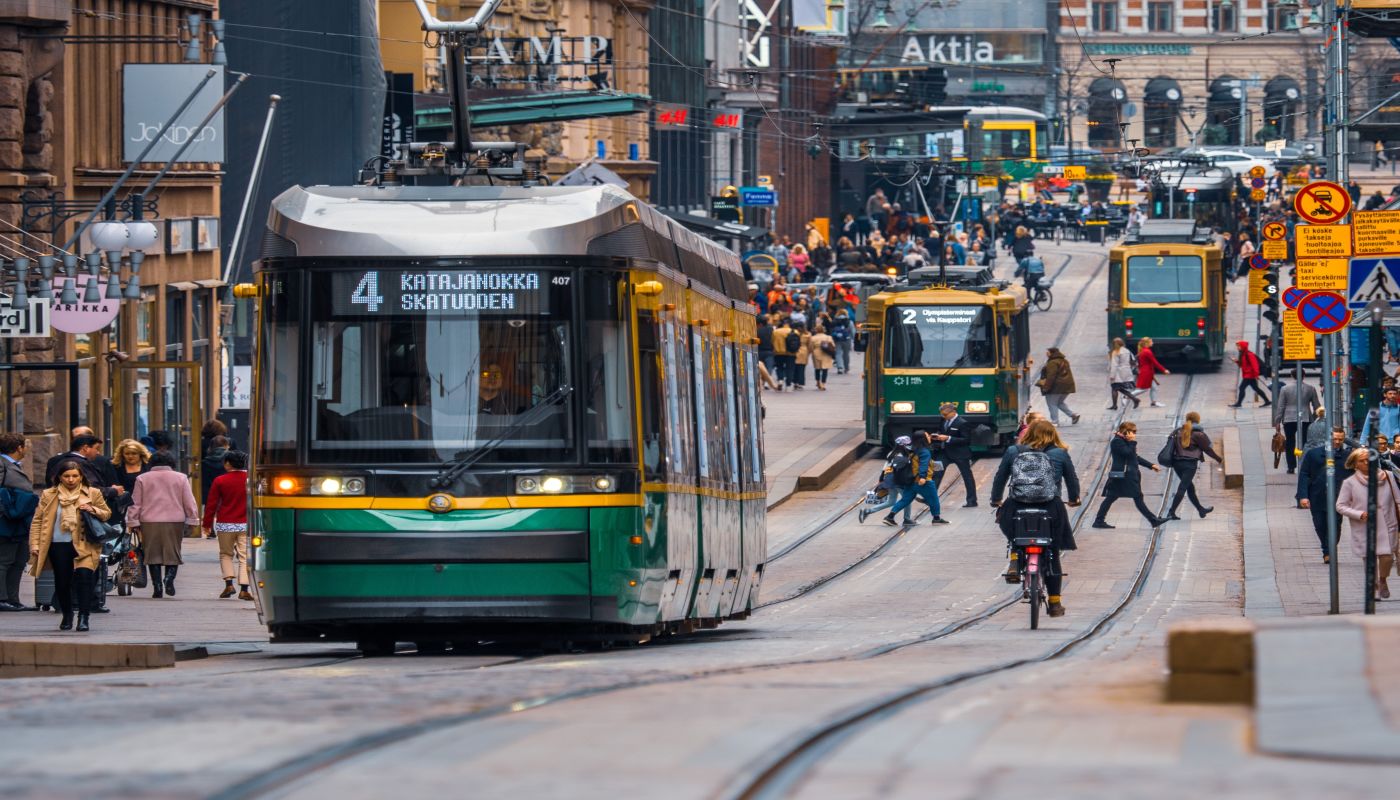
Landscape of Finland
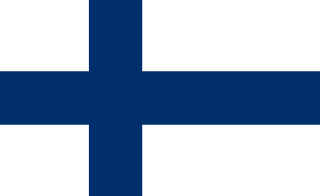
Flag of Finland

Finland

Europe

Finland is in Northern Europe, bordered by Sweden to the west, Norway to the north, and Russia to the east. With a population of just over 5.5 million people, it is one of the least densely populated countries in the world, giving it a unique charm and sense of spaciousness. The country is known for its stunning natural landscapes, including thousands of lakes, forests, and expansive coastlines. Finland is renowned for its achievements in education, technology, and environmental sustainability. The country consistently ranks among the happiest and most prosperous nations in the world, with high standards of living and a strong social welfare system. It is also recognized for its gender equality and progressive social policies. Whether you're interested in exploring its natural beauty, learning about its cultural traditions, or experiencing its cutting-edge educational system, Finland is a wonderful place to be.

What would you like to learn about in Finland?

Select a section to explore the country where nonprofits are creating positive change.

About Finland

Finland was a province and then a grand duchy under Sweden from the 12th to the 19th centuries, and an autonomous grand duchy of Russia after 1809. It won its complete independence in 1917. During World War II, it was able to successfully defend its freedom and resist invasions by the Soviet Union - albeit with some loss of territory. In the subsequent half century, the Finns made a remarkable transformation from a farm/forest economy to a diversified modern industrial economy; per capita income is now among the highest in Western Europe. A member of the European Union since 1995, Finland was the only Nordic state to join the euro system at its initiation in January 1999. In the 21st century, the key features of Finland's modern welfare state are a high standard of education, equality promotion, and national social security system - currently challenged by an aging population and the fluctuations of an export-driven economy.

Quick Facts

Population
5,266,114 (July 2013 est.)
Area
338,145 sq km
ISO Code
FI
Continent
Europe
Government
republic
Active Causes
12
View all countries in Europe

Geography & Environment

Climate

cold temperate; potentially subarctic but comparatively mild because of moderating influence of the North Atlantic Current, Baltic Sea, and more than 60,000 lakes

Terrain

mostly low, flat to rolling plains interspersed with lakes and low hills

Natural Resources

timber, iron ore, copper, lead, zinc, chromite, nickel, gold, silver, limestone

Environmental Issues

air pollution from manufacturing and power plants contributing to acid rain; water pollution from industrial wastes, agricultural chemicals; habitat loss threatens wildlife populations

People & Society

79.55 years
Avg. Life Expectancy
100%
Literacy Rate
85% of total population (2010)
Total Urban Population

Languages

Finnish (official) 91.2%, Swedish (official) 5.5%, other (small Sami- and Russian-speaking minorities) 3.3% (2007)

Religions

Lutheran Church of Finland 82.5%, Orthodox Church 1.1%, other Christian 1.1%, other 0.1%, none 15.1% (2006)

Health Expenditure

9% of GDP (2010) of GDP

Education Expenditure

6.8% of GDP (2009) of GDP

Economy

$37,000
GDP per Capita (PPP)
7.8%
Unemployment Rate
NA%
Below Poverty Line

Economic Overview

Finland has a highly industrialized, largely free-market economy with per capita output almost as high as that of Austria, Belgium, the Netherlands, and Sweden. Trade is important with exports accounting for over one third of GDP in recent years. Finland is strongly competitive in manufacturing - principally the wood, metals, engineering, telecommunications, and electronics industries. Finland excels in high-tech exports such as mobile phones. Except for timber and several minerals, Finland depends on imports of raw materials, energy, and some components for manufactured goods. Because of the...

Causes in Finland

Environment

Finland, known for its pristine natural landscapes and commitment to environmental sustainability, is deeply impacted by various environmental factors. The country's economy heavily relies on industries such as forestry, mining, and technology, all of which have significant implications for the environment. Climate change poses a serious threat to Finland, with rising temperatures leading to the melting of the country's glaciers and changing weather patterns. This has direct consequences on agriculture, forestry, and biodiversity. Additionally, Finland faces challenges related to air and water pollution, as well as waste management. Efforts are being made to mitigate these issues through policies promoting renewable energy sources, sustainable forestry practices, and waste reduction initiatives. However, continued awareness and action are crucial to preserve Finland's natural beauty and ensure a healthy environment for future generations.

Family

In Finland, family plays a significant role in shaping individuals' lives and society as a whole. The Finnish culture places high value on strong family ties, with an emphasis on support, care, and respect for one another. Family members are traditionally seen as a source of emotional support and security, contributing to the overall well-being of individuals. Moreover, the Finnish government has implemented various family-friendly policies, such as generous parental leave and childcare benefits, to support families in balancing work and family life. These policies aim to promote gender equality, social inclusion, and children's well-being within the family unit. Overall, the importance of family in Finland is deeply ingrained in societal norms and values, playing a crucial role in fostering a cohesive and supportive community.

Human Rights

Finland, a Nordic country known for its high quality of life and advanced social welfare system, places a strong emphasis on upholding human rights within its borders. As a signatory to various international human rights treaties, including the Universal Declaration of Human Rights and the European Convention on Human Rights, Finland is committed to promoting and protecting the fundamental rights and freedoms of all individuals. The Finnish legal system ensures that citizens have access to justice and equality before the law, regardless of their background or circumstances. In recent years, Finland has made significant progress in addressing issues such as gender equality, LGBTQ+ rights, and the rights of indigenous Sámi people. However, challenges remain, particularly concerning the treatment of asylum seekers and refugees in the country. By continuing to prioritize human rights in its policies and practices, Finland can further enhance its reputation as a global leader in promoting dignity and equality for all.

Education

Finland is globally renowned for its exceptional education system, consistently ranking at the top of international assessments. Education in Finland is not only viewed as a fundamental right but also as a key driver of societal progress and economic growth. The Finnish education system emphasizes equality, high-quality teaching, personalized learning, and a holistic approach that fosters creativity and critical thinking skills among students. With a strong focus on early childhood education, teacher professionalism, and continuous learning, Finland has succeeded in creating an inclusive and effective educational environment for all its citizens. This commitment to education has played a significant role in shaping Finland's high levels of literacy, innovation, and overall well-being as a nation.

Poverty

Finland, known for its high quality of life and strong social welfare system, is not immune to the impacts of poverty. Despite being one of the most prosperous nations in the world, poverty remains a significant issue, particularly affecting certain marginalized groups such as the elderly, single-parent families, and immigrants. Poverty in Finland is often linked to unemployment, low educational attainment, and social exclusion. The effects of poverty can be far-reaching, leading to inadequate access to healthcare, education, and housing, thus perpetuating a cycle of disadvantage. Addressing poverty in Finland requires comprehensive social policies and targeted interventions to ensure that all individuals have equal opportunities to thrive in society.

Religion

Religion in Finland plays a significant role in shaping the cultural and social fabric of the nation. Historically, Finland has been predominantly Lutheran, with the Evangelical Lutheran Church of Finland being the largest religious denomination. However, in recent years, there has been a noticeable decline in religious affiliation among Finns, with an increasing number of people identifying as non-religious or belonging to other faiths. This shift is reflective of broader trends across Europe, where secularization has led to a more diverse religious landscape. Despite this trend, religious traditions and customs still hold importance in Finnish society, particularly during holidays and ceremonies. The influence of religion can also be seen in ethical considerations and certain social norms. Overall, religion continues to be a key aspect of Finnish identity and culture, albeit with evolving dynamics.

Clean Water

Finland, known for its pristine lakes and natural landscapes, places a high value on clean water. Clean water is essential for various aspects of Finnish life, including agriculture, industry, and recreation. With over 180,000 lakes and countless rivers, Finland's economy heavily relies on water resources for activities such as fishing, forestry, and hydropower production. Moreover, the country's commitment to environmental conservation is reflected in its rigorous water quality standards and monitoring programs. Despite these efforts, challenges such as agricultural runoff and pollution from industries still pose threats to Finland's water quality. It is crucial for both the government and citizens to continue prioritizing the protection of clean water sources to safeguard public health and sustain the country's natural ecosystems.

Economy

Finland, located in Northern Europe, boasts a highly developed economy known for its commitment to innovation, technology, and sustainability. The Finnish economy is primarily driven by exports, with key industries including electronics, machinery, and forestry products. The country's strong economic performance can be attributed to factors such as a skilled workforce, high-quality education system, and a business-friendly environment. However, Finland faces challenges such as an aging population and increasing global competition. The economy's impact on Finland is profound, influencing various aspects of society including education, healthcare, and social welfare programs. As the country continues to navigate economic changes, sustainable growth and strategic investments will be crucial for maintaining its competitiveness on the global stage.

Government

Finland, a Nordic country known for its high quality of life and advanced welfare state, is greatly influenced by its government across various sectors. The Finnish government plays a crucial role in providing social services such as healthcare, education, and social security, contributing to the overall well-being of its citizens. With a strong emphasis on equality and sustainability, Finland's government policies focus on promoting gender equality, environmental protection, and innovation. Additionally, the government's commitment to education and research has positioned Finland as a global leader in education rankings. Through effective governance and strategic planning, the Finnish government continues to shape the country's economic development and social stability.

Health

Finland, a Nordic country known for its high quality of life and advanced healthcare system, faces several health-related challenges. Despite having one of the best healthcare systems in the world, Finland grapples with issues such as mental health disorders, alcohol consumption, and an aging population. Mental health disorders are a significant concern in Finland, with depression and anxiety being prevalent among its population. Additionally, alcohol consumption is a widespread issue, leading to various health problems and social issues. The country's aging population poses challenges in terms of providing adequate healthcare services and support for the elderly. Addressing these health issues is crucial to ensuring the well-being of the Finnish population and maintaining the country's reputation for high-quality healthcare services.

Children

In Finland, children are regarded as the cornerstone of society, with a strong emphasis placed on their well-being and development. The Finnish government has implemented comprehensive social policies that prioritize early childhood education, healthcare, and social services to ensure the optimal growth and welfare of children. This approach has led to positive outcomes, with Finland consistently ranking high in global child well-being indices. However, despite these achievements, challenges persist, such as increasing mental health issues among Finnish youth and disparities in access to quality education and healthcare services. By addressing these challenges and continuing to prioritize the welfare of children, Finland can further enhance the well-being of its youngest citizens and secure a prosperous future for the nation.

Animals

In Finland, animals play a significant role in shaping the country's culture, economy, and environment. The vast forests and pristine lakes provide natural habitats for a diverse range of wildlife, including reindeer, bears, and seals. Reindeer herding is a traditional livelihood for the indigenous Sámi people, with approximately 200,000 reindeer roaming freely in the northern regions of the country. Hunting and fishing are also popular activities, with strict regulations in place to ensure sustainable practices and preserve biodiversity. Additionally, Finland has a strong tradition of animal welfare, with laws protecting domesticated animals from cruelty and neglect. Overall, animals are an integral part of Finland's identity and well-being, emphasizing the importance of conservation efforts to safeguard their future.

Nonprofits Working in Finland

Discover organizations making a difference in Finland

Make Your Impact Today

Discover causes you care about and support the nonprofits making a difference in communities around the world.

Are you a nonprofit? Join Project World Impact for free

Join Us Free