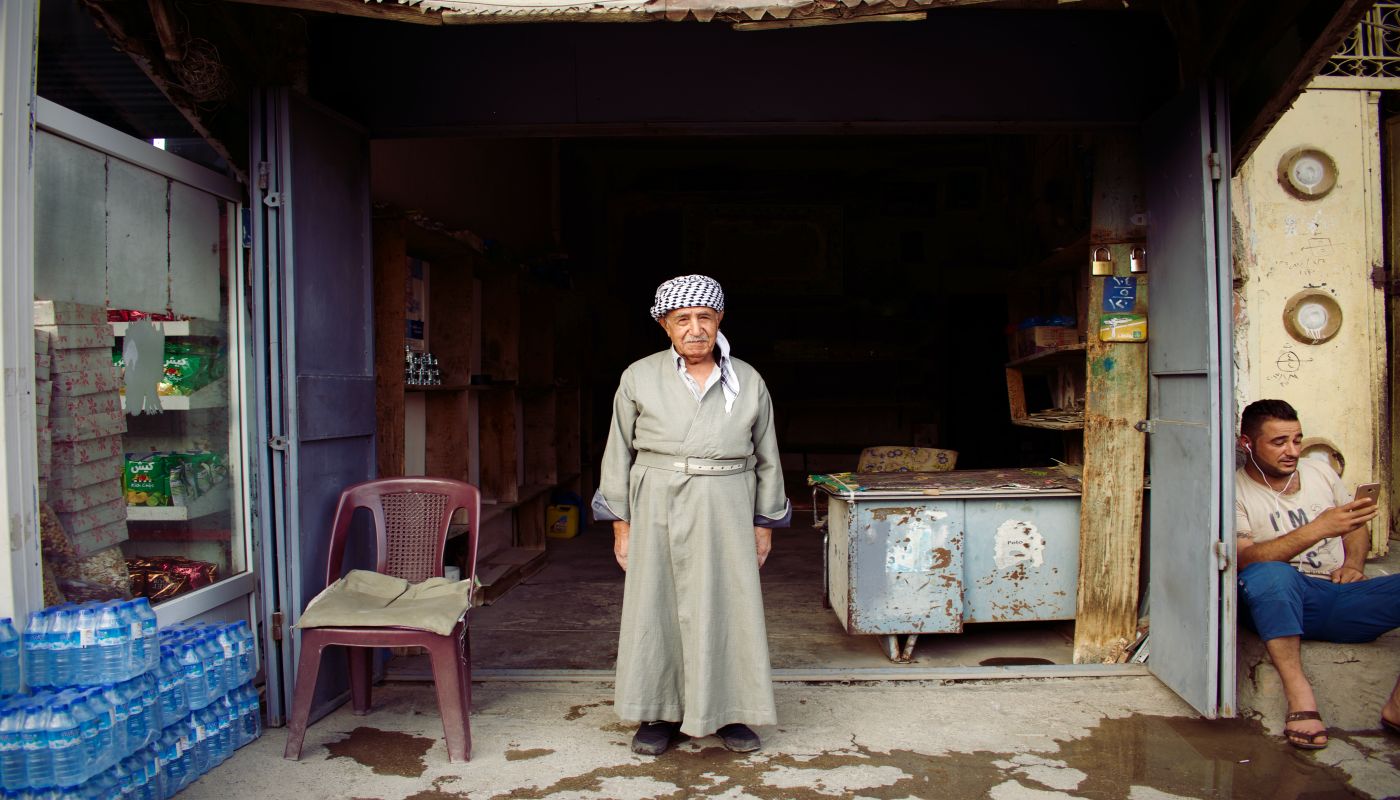
Landscape of Iraq
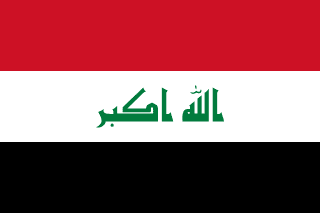
Flag of Iraq

Iraq

Asia

Iraq has a population of around 40 million people, and this Middle Eastern Country is situated in the heart of the Fertile Crescent. Even in the face of ongoing political and economic challenges, Iraq is making significant strides in rebuilding and modernizing its infrastructure, including roads, bridges, airports, and telecommunications. The country is also rich in natural resources, including oil and gas, which are important drivers of the economy.

What would you like to learn about in Iraq?

Select a section to explore the country where nonprofits are creating positive change.

About Iraq

Formerly part of the Ottoman Empire, Iraq was occupied by Britain during the course of World War I; in 1920, it was declared a League of Nations mandate under UK administration. In stages over the next dozen years, Iraq attained its independence as a kingdom in 1932. A "republic" was proclaimed in 1958, but in actuality a series of strongmen ruled the country until 2003. The last was SADDAM Husayn. Territorial disputes with Iran led to an inconclusive and costly eight-year war (1980-88). In August 1990, Iraq seized Kuwait but was expelled by US-led, UN coalition forces during the Gulf War of January-February 1991. Following Kuwait's liberation, the UN Security Council (UNSC) required Iraq to scrap all weapons of mass destruction and long-range missiles and to allow UN verification inspections. Continued Iraqi noncompliance with UNSC resolutions over a period of 12 years led to the US-led invasion of Iraq in March 2003 and the ouster of the SADDAM Husayn regime. US forces remained in Iraq under a UNSC mandate through 2009 and under a bilateral security agreement thereafter, helping to provide security and to train and mentor Iraqi security forces. In October 2005, Iraqis approved a constitution in a national referendum and, pursuant to this document, elected a 275-member Council of Representatives (COR) in December 2005. The COR approved most cabinet ministers in May 2006, marking the transition to Iraq's first constitutional government in nearly a half century. In January 2009, Iraq held elections for provincial councils in all governorates except for the three governorates comprising the Kurdistan Regional Government and Kirkuk Governorate. Iraq held a national legislative election in March 2010 - choosing 325 legislators in an expanded COR - and, after nine months of deadlock the COR approved the new government in December 2010. Nearly nine years after the start of the Second Gulf War in Iraq, US military operations there ended in mid-December 2011.

Quick Facts

Population
31,858,481 (July 2013 est.)
Area
438,317 sq km
ISO Code
IQ
Continent
Asia
Government
parliamentary democracy
Active Causes
12
View all countries in Asia

Geography & Environment

Climate

mostly desert; mild to cool winters with dry, hot, cloudless summers; northern mountainous regions along Iranian and Turkish borders experience cold winters with occasionally heavy snows that melt in...

Terrain

mostly broad plains; reedy marshes along Iranian border in south with large flooded areas; mountains along borders with Iran and Turkey

Natural Resources

petroleum, natural gas, phosphates, sulfur

Environmental Issues

government water control projects have drained most of the inhabited marsh areas east of An Nasiriyah by drying up or diverting the feeder streams and rivers; a once sizable population of Marsh Arabs,...

People & Society

71.14 years
Avg. Life Expectancy
78.5%
Literacy Rate
66.5% of total population (2011)
Total Urban Population

Languages

Arabic (official), Kurdish (official), Turkmen (a Turkish dialect) and Assyrian (Neo-Aramaic) are official in areas where they constitute a majority o...

Religions

Muslim (official) 97% (Shia 60%-65%, Sunni 32%-37%), Christian or other 3%

Health Expenditure

8.4% of GDP (2010) of GDP

Education Expenditure

NA of GDP

Economy

$7,200
GDP per Capita (PPP)
16%
Unemployment Rate
25% (2008 est.)
Below Poverty Line

Economic Overview

An improving security environment and foreign investment are helping to spur economic activity, particularly in the energy, construction, and retail sectors. Broader economic development, long-term fiscal health, and sustained improvements in the overall standard of living still depend on the central government passing major policy reforms. Iraq's largely state-run economy is dominated by the oil sector, which provides more than 90% of government revenue and 80% of foreign exchange earnings. Iraq in 2012 boosted oil exports to a 30-year high of 2.6 million barrels per day, a significant increa...

Causes in Iraq

Environment

Iraq, situated in the Middle East, faces significant environmental challenges that impact its population and economy. The country's environment is heavily affected by water scarcity, desertification, air pollution, and lack of proper waste management. Water scarcity is a pressing issue in Iraq, with the Tigris and Euphrates rivers facing pollution and reduced water flow due to upstream dam construction. Desertification poses a threat to agricultural lands, reducing food security and exacerbating poverty. Air pollution from industries and vehicle emissions contributes to respiratory illnesses among the population. Inadequate waste management systems lead to pollution of land and water sources. These environmental challenges in Iraq have detrimental effects on public health, agricultural productivity, and overall quality of life for its citizens. It is crucial to address these issues through sustainable practices and policies to ensure a healthier environment for current and future generations.

Human Rights

Iraq has a complex history marked by political instability, armed conflict, and human rights violations. The country has faced significant challenges in upholding human rights, with issues such as arbitrary detention, torture, and restrictions on freedom of expression being prevalent. The impact of these violations on the population has been profound, leading to widespread suffering and a lack of accountability for perpetrators. Efforts to improve the human rights situation in Iraq have been hindered by ongoing conflict and political tensions. It is crucial for the international community to support initiatives that promote human rights in Iraq to ensure a more just and equitable society for its citizens.

Education

Iraq has faced significant challenges in the realm of education due to decades of conflict and instability. The education system in Iraq has suffered from underfunding, lack of resources, and infrastructure damage. These issues have resulted in a high dropout rate among students and limited access to quality education, particularly for marginalized populations such as girls and those living in rural areas. The impact of this educational crisis is far-reaching, affecting the country's social and economic development. Without a well-functioning education system, Iraq faces barriers to progress and the potential for perpetuating cycles of poverty and inequality. It is crucial for stakeholders to prioritize investment in education to ensure a brighter future for the people of Iraq.

Poverty

Iraq, a country in the Middle East, faces significant challenges with poverty that have a profound impact on its population. With a poverty rate of around 22% according to the World Bank, many Iraqis struggle to meet their basic needs such as food, shelter, and healthcare. Factors contributing to poverty in Iraq include ongoing conflicts and political instability, which have disrupted the economy and infrastructure development. Additionally, high unemployment rates, particularly among youth, exacerbate the issue of poverty in the country. The consequences of poverty in Iraq are far-reaching, affecting individuals' access to education, healthcare, and overall quality of life. It is crucial to address the root causes of poverty in Iraq and implement sustainable solutions to improve the well-being of its citizens.

Religion

Iraq is a country deeply influenced by religion, with Islam being the dominant faith among its population. The two main sects of Islam in Iraq are Sunni and Shia, leading to a complex religious landscape that has often been a source of tension and conflict. Religion plays a significant role in shaping the social, political, and cultural fabric of Iraqi society, influencing everything from governance to daily life. This influence has sometimes resulted in sectarian violence and political instability, as different religious groups compete for power and influence. Despite efforts to promote religious tolerance and coexistence, challenges persist in bridging the divides created by religious differences in Iraq.

Clean Water

Iraq faces significant challenges in providing clean water to its population. The country's water sources have been heavily polluted due to decades of conflict, inadequate infrastructure, and industrial waste. Access to clean water is a critical issue in Iraq, with over 70% of the population lacking access to safe drinking water. Contaminated water sources have led to the spread of waterborne diseases, posing a severe threat to public health. The lack of access to clean water also hinders economic development and perpetuates cycles of poverty. Addressing the issue of clean water in Iraq requires significant investment in infrastructure, environmental protection, and sustainable water management practices.

Economy

Iraq, a country in the Middle East, has faced various challenges that have significantly impacted its economy. The economy of Iraq heavily relies on oil production and exports, with oil accounting for the majority of government revenue. However, political instability, corruption, and armed conflict have hindered economic growth and stability in the region. The ongoing violence and insecurity have deterred foreign investment and disrupted infrastructure development, further exacerbating economic struggles. Additionally, the COVID-19 pandemic has added to the economic woes of Iraq, leading to a decline in oil prices and a contraction in non-oil sectors. These economic challenges have had a profound impact on the livelihoods of Iraqi citizens, with high unemployment rates and limited access to basic services. Addressing these issues is crucial to improving the economic situation in Iraq and fostering sustainable development for its people.

Government

Iraq, located in the Middle East, has been shaped by a tumultuous history influenced significantly by its government. The country has faced decades of political instability, conflict, and foreign intervention, leading to social and economic challenges for its population. The government of Iraq plays a crucial role in the country's development and stability. Poor governance, corruption, and sectarian divisions have hindered progress and contributed to widespread discontent among citizens. Additionally, the government's handling of issues such as security, public services, and infrastructure has a direct impact on the daily lives of Iraqis. It is essential for the government to address these issues effectively to improve the overall well-being of the population and foster a more stable and prosperous future for Iraq.

Health

Iraq has faced significant health challenges due to decades of conflict, political instability, and economic hardship. The country's health system has been strained, leading to a lack of access to quality healthcare services for many Iraqis. In addition, ongoing violence and displacement have contributed to a rise in mental health issues and trauma among the population. Infectious diseases such as cholera and hepatitis remain a concern, exacerbated by inadequate sanitation and limited access to clean water. Non-communicable diseases like diabetes and cardiovascular conditions are also on the rise, highlighting the need for better preventative care and management strategies in Iraq. Addressing these health issues requires sustained efforts to rebuild healthcare infrastructure, improve access to essential services, and provide support for mental health needs in the country.

Children

Iraq has faced significant challenges in recent years, impacting the lives of children across the country. The ongoing conflict, displacement, and economic instability have severely affected children in Iraq, leading to widespread poverty, malnutrition, lack of access to education, and healthcare. According to UNICEF, more than 4 million children in Iraq are in need of humanitarian assistance, with many living in internally displaced camps lacking basic necessities. The psychological impact of living through conflict and displacement has also taken a toll on children's well-being, with many experiencing trauma and distress. Addressing the needs of children in Iraq is crucial to ensure their fundamental rights are protected and that they have the opportunity to grow up in a safe and nurturing environment.

Family

Family plays a crucial role in Iraqi society, serving as the cornerstone of social structure and support for individuals. In Iraq, families are typically large and extended, with strong bonds between members. Family relationships are highly valued, and respect for elders is deeply ingrained in the culture. The concept of honor and reputation within the family is of utmost importance, influencing decisions and actions of its members. Moreover, families in Iraq often provide financial, emotional, and practical assistance to one another, especially in times of need or crisis. However, the prolonged conflict and instability in the region have had detrimental effects on families, leading to disruptions and displacement that have strained traditional family structures. It is crucial to recognize the significance of family in Iraqi society and support initiatives that strengthen familial bonds to promote resilience and well-being within communities.

Animals

Iraq, a country in the Middle East, is home to a diverse range of animal species that play crucial roles in its ecosystem. However, various factors such as habitat destruction, pollution, and climate change have significantly impacted the animal population in Iraq. Endangered species like the Persian leopard and the Basra reed warbler are facing threats to their survival due to human activities and environmental challenges. Additionally, illegal wildlife trade and hunting practices further endanger the already vulnerable animal species in Iraq. Conservation efforts are being made by local organizations and international bodies to protect and preserve the wildlife in Iraq, but more awareness and action are needed to ensure the long-term sustainability of these precious animals.

Nonprofits Working in Iraq

Discover organizations making a difference in Iraq

Make Your Impact Today

Discover causes you care about and support the nonprofits making a difference in communities around the world.

Are you a nonprofit? Join Project World Impact for free

Join Us Free