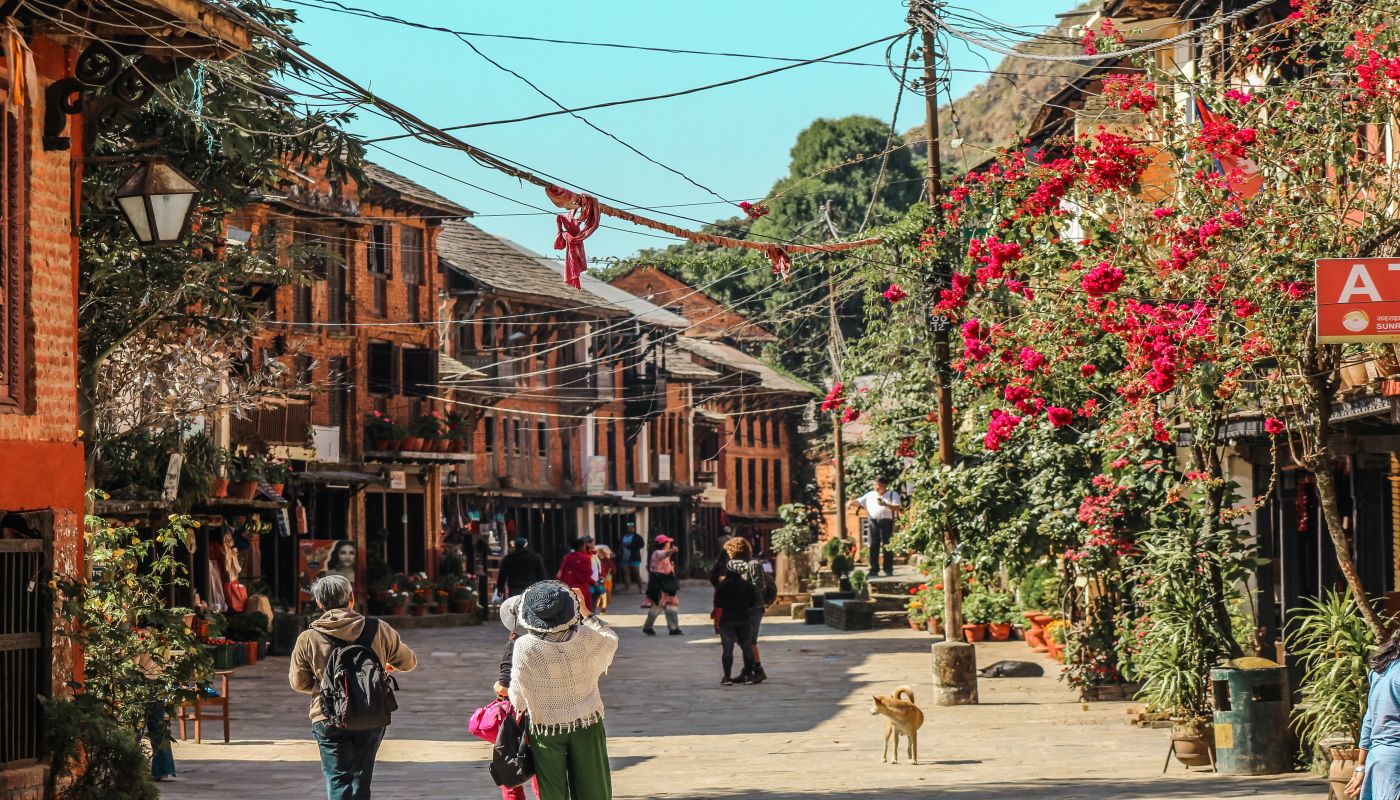
Landscape of Nepal
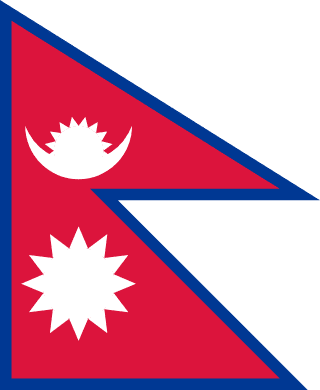
Flag of Nepal

Nepal

Asia

Nepal is a beautiful and culturally rich country located in the Himalayas, known for its stunning mountain scenery, ancient temples, and vibrant culture. With a population of over 29 million people, Nepal is a developing country that has faced numerous challenges in recent years, including poverty and political instability. Despite these challenges, the country has a highly educated workforce and a strong commitment to environmental conservation.

What would you like to learn about in Nepal?

Select a section to explore the country where nonprofits are creating positive change.

About Nepal

In 1951, the Nepali monarch ended the century-old system of rule by hereditary premiers and instituted a cabinet system of government. Reforms in 1990 established a multiparty democracy within the framework of a constitutional monarchy. An insurgency led by Maoist extremists broke out in 1996. The ensuing 10-year civil war between insurgents and government forces witnessed the dissolution of the cabinet and parliament and assumption of absolute power by the king. Several weeks of mass protests in April 2006 were followed by several months of peace negotiations between the Maoists and government officials, and culminated in a November 2006 peace accord and the promulgation of an interim constitution. Following a nationwide election in April 2008, the newly formed Constituent Assembly (CA) declared Nepal a federal democratic republic and abolished the monarchy at its first meeting the following month. The CA elected the country's first president in July. Between 2008 and 2011 there have been four different coalition governments, led twice by the United Communist Party of Nepal-Maoist, which received a plurality of votes in the Constituent Assembly election, and twice by the Communist Party of Nepal-United Marxist-Leninist. In August 2011, Baburam BHATTARAI of the United Communist Party of Nepal (Maoist) became prime minister. After the CA failed to draft a constitution by the May 2012 deadline, BHATTARAI dissolved the CA and called for new elections. Months of negotiations failed to produce a new election date. Finally, in March 2013, the chief justice of Nepal's Supreme Court, Khil Raj REGMI, was sworn in as Chairman of the Interim Council of Ministers for Elections to lead an interim government and charged with holding Constituent Assembly elections by December 2013.

Quick Facts

Population
30,430,267 (July 2013 est.)
Area
147,181 sq km
ISO Code
NP
Continent
Asia
Government
federal democratic republic
Active Causes
12
View all countries in Asia

Geography & Environment

Climate

varies from cool summers and severe winters in north to subtropical summers and mild winters in south

Terrain

Tarai or flat river plain of the Ganges in south, central hill region, rugged Himalayas in north

Natural Resources

quartz, water, timber, hydropower, scenic beauty, small deposits of lignite, copper, cobalt, iron ore

Environmental Issues

deforestation (overuse of wood for fuel and lack of alternatives); contaminated water (with human and animal wastes, agricultural runoff, and industrial effluents); wildlife conservation; vehicular em...

People & Society

66.86 years
Avg. Life Expectancy
57.4%
Literacy Rate
17% of total population (2011)
Total Urban Population

Languages

Nepali (official) 47.8%, Maithali 12.1%, Bhojpuri 7.4%, Tharu (Dagaura/Rana) 5.8%, Tamang 5.1%, Newar 3.6%, Magar 3.3%, Awadhi 2.4%, other 10%, unspec...

Religions

Hindu 80.6%, Buddhist 10.7%, Muslim 4.2%, Kirant 3.6%, other 0.9% (2001 census)

Health Expenditure

5.5% of GDP (2010) of GDP

Education Expenditure

4.7% of GDP (2010) of GDP

Economy

$1,300
GDP per Capita (PPP)
46%
Unemployment Rate
25.2% (2011 est.)
Below Poverty Line

Economic Overview

Nepal is among the poorest and least developed countries in the world, with about one-quarter of its population living below the poverty line. Agriculture is the mainstay of the economy, providing a livelihood for three-fourths of the population and accounting for a little over one-third of GDP. Industrial activity mainly involves the processing of agricultural products, including pulses, jute, sugarcane, tobacco, and grain. Nepal has considerable scope for exploiting its potential in hydropower, with an estimated 42,000 MW of feasible capacity, but political instability hampers foreign invest...

Causes in Nepal

Environment

Nepal, a landlocked country nestled in the Himalayas, is renowned for its breathtaking natural beauty and rich biodiversity. However, Nepal faces significant environmental challenges that have a profound impact on its people and ecosystems. Climate change has led to erratic weather patterns, melting glaciers, and an increase in natural disasters such as floods and landslides. Deforestation and habitat destruction threaten the country's unique wildlife and contribute to soil erosion and water scarcity. Air pollution from vehicular emissions and industrial activities has led to serious health issues for the population, particularly in urban areas like Kathmandu. Addressing these environmental issues is crucial for Nepal's sustainable development and the well-being of its citizens.

Family

In Nepal, family plays a central role in shaping the social fabric and dynamics of the society. The concept of family extends beyond just immediate relatives to include extended family members, such as grandparents, aunts, uncles, and cousins. Families in Nepal are typically large and closely-knit, with multiple generations residing together under one roof. This close bond fosters a strong sense of community and support among family members. Furthermore, familial ties are deeply rooted in Nepalese culture and tradition, dictating social norms, values, and customs. Family gatherings and celebrations are important occasions for strengthening these bonds and upholding traditions. However, it is important to note that the traditional family structure in Nepal is evolving due to factors such as urbanization, migration, and changing social norms. While the traditional family unit remains integral to Nepalese society, these changes are gradually influencing familial dynamics in the country.

Human Rights

Nepal, a landlocked country nestled in the Himalayas, faces significant challenges in upholding human rights. Despite progress in recent years, issues such as discrimination against marginalized communities, limited access to justice, and gender-based violence persist. Nepal's history of political instability and armed conflict has left a legacy of impunity and a weak rule of law. Human rights violations, including forced disappearances and torture, continue to be reported. The government's efforts to address these issues have been hindered by a lack of resources and capacity. International organizations and civil society groups play a crucial role in advocating for human rights in Nepal and holding the government accountable. As Nepal strives towards sustainable development and social justice, protecting and promoting human rights remains a fundamental challenge that requires continued attention and action.

Education

Education plays a significant role in shaping the socio-economic landscape of Nepal. The country's education system has faced challenges due to factors such as limited resources, inadequate infrastructure, and a lack of trained teachers. As a result, many children, especially those from marginalized communities, are deprived of quality education. This hinders their overall development and perpetuates the cycle of poverty. The impact of education on Nepal is profound, as it not only empowers individuals with knowledge and skills but also contributes to national development by fostering innovation, entrepreneurship, and social cohesion. Access to quality education is crucial for Nepal to achieve sustainable development goals and address issues such as poverty, gender inequality, and social disparities.

Poverty

Nepal, a landlocked country in South Asia, grapples with the pervasive issue of poverty that significantly impacts its population. With a high poverty rate of around 25%, many Nepalese struggle to meet their basic needs, such as access to clean water, adequate nutrition, and healthcare services. The combination of limited economic opportunities, political instability, and natural disasters like earthquakes and monsoons exacerbates the poverty situation in Nepal. This dire situation further perpetuates inequalities, hampers sustainable development, and poses challenges to achieving long-term economic growth and social progress in the country.

Religion

Religion holds significant influence in the diverse and culturally rich nation of Nepal. With a population that practices a variety of religions including Hinduism, Buddhism, Islam, and Christianity among others, religious beliefs play a crucial role in shaping societal norms, traditions, and values. Hinduism, being the predominant religion, has a profound impact on Nepalese culture, influencing practices such as festivals, rituals, and social hierarchy. Similarly, Buddhism is deeply rooted in the country's history, with sacred sites like Lumbini, the birthplace of Lord Buddha, attracting pilgrims from around the world. Despite the constitutional guarantee of religious freedom, tensions between different religious groups occasionally arise, highlighting the need for tolerance and understanding in this diverse nation.

Clean Water

Nepal, a landlocked country nestled in the Himalayas, faces significant challenges when it comes to ensuring clean water for its population. With over 80% of Nepal's population residing in rural areas, access to safe drinking water remains a pressing issue. Contaminated water sources, inadequate sanitation facilities, and poor hygiene practices contribute to waterborne diseases such as diarrhea, cholera, and typhoid, leading to high mortality rates, particularly among children under the age of five. The lack of proper infrastructure for water management and treatment further exacerbates the situation. Addressing the issue of clean water in Nepal is crucial not only for improving public health but also for promoting economic development and social well-being in the country.

Economy

Nepal, a landlocked country situated in South Asia, is grappling with various economic challenges that significantly impact its population. The Nepalese economy heavily relies on agriculture, tourism, and remittances from abroad. However, factors such as political instability, inadequate infrastructure, and geographical constraints hinder the country's economic growth. The lack of industrialization and diversification in the economy further exacerbates the situation. As a result, Nepal faces high levels of poverty, unemployment, and income inequality, making it one of the poorest countries in the region. Addressing these economic issues is crucial for Nepal to improve the living standards of its citizens and achieve sustainable development.

Government

Nepal, a South Asian nation known for its diverse culture, stunning landscapes, and rich history, faces numerous challenges that significantly impact its population. The government of Nepal plays a crucial role in addressing these issues and shaping the country's future. Political instability, corruption, inadequate infrastructure, and natural disasters are some of the key challenges that Nepal grapples with. The government's policies and actions directly influence the country's economic development, social welfare programs, and environmental conservation efforts. By promoting transparency, accountability, and effective governance practices, the Nepalese government can help address these challenges and improve the overall well-being of its citizens.

Health

Nepal, a landlocked country in South Asia, faces numerous health challenges that significantly impact its population. Poor sanitation and limited access to clean water contribute to the high prevalence of waterborne diseases such as diarrhea and cholera. Additionally, Nepal grapples with a high maternal mortality rate due to inadequate healthcare services and a lack of skilled birth attendants in rural areas. Infectious diseases like tuberculosis and malaria also pose significant public health concerns in Nepal. Furthermore, the country's vulnerability to natural disasters, such as earthquakes and floods, further exacerbates health issues by disrupting healthcare services and infrastructure. Addressing these health challenges requires concerted efforts towards improving healthcare infrastructure, enhancing access to healthcare services, promoting sanitation and hygiene practices, and strengthening disease surveillance systems in Nepal.

Children

Nepal, a country nestled in the Himalayas, is home to a significant population of children facing a myriad of challenges that impact their well-being and potential for a bright future. The children in Nepal often grapple with issues such as poverty, limited access to education and healthcare, child labor, and child marriage. These factors not only hinder their personal development but also hinder the overall progress of the nation. Child labor remains prevalent in sectors such as agriculture, construction, and domestic work, depriving children of their right to education and subjecting them to hazardous working conditions. Moreover, child marriage persists in certain communities, leading to early pregnancies, health risks, and limited opportunities for young girls. Addressing these issues requires a concerted effort from government bodies, non-governmental organizations, and the international community to ensure that every child in Nepal is afforded the opportunity to thrive and reach their full potential.

Animals

Nepal, a country renowned for its diverse culture and breathtaking landscapes, also harbors a rich array of wildlife that plays a significant role in the country's ecosystem and economy. Animals in Nepal have a profound impact on the nation, serving as a vital part of its biodiversity and attracting tourists from around the world. The conservation efforts for iconic species like the Bengal tiger, one-horned rhinoceros, and snow leopard are crucial to maintaining the delicate balance of Nepal's ecosystems. Furthermore, livestock such as goats, sheep, and cattle are essential for the livelihoods of many Nepalese people, providing them with food, income, and resources. However, challenges such as habitat loss, poaching, and climate change threaten the well-being of these animals and ultimately jeopardize the sustainability of Nepal's natural heritage.

Nonprofits Working in Nepal

Discover organizations making a difference in Nepal

Make Your Impact Today

Discover causes you care about and support the nonprofits making a difference in communities around the world.

Are you a nonprofit? Join Project World Impact for free

Join Us Free