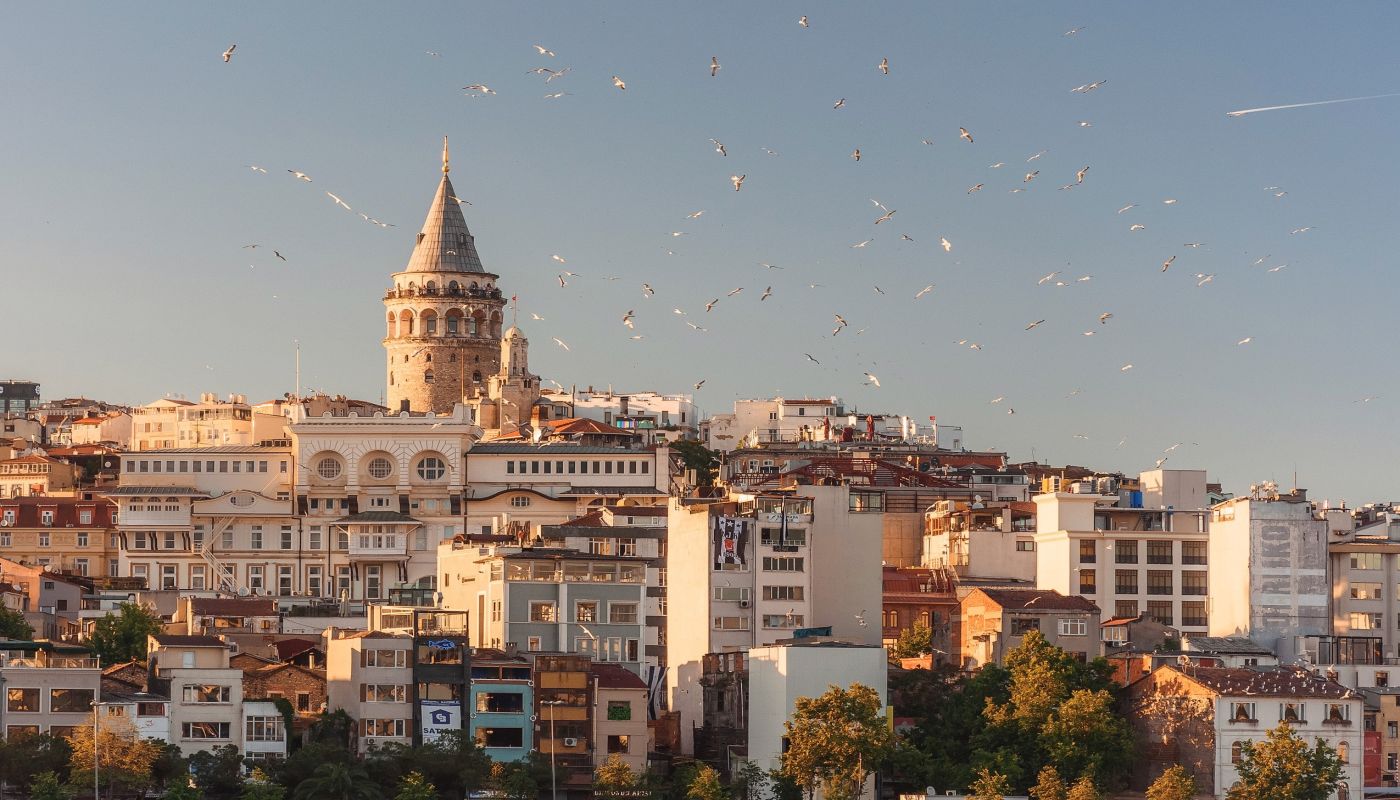
Landscape of Turkey
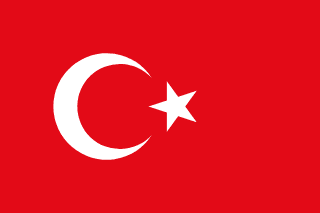
Flag of Turkey

Turkey

Asia

Turkey is a transcontinental country located at the crossroads of Europe and Asia, known for its stunning natural landscapes, rich history, and complex political and cultural identity. With a population of over 83 million people, Turkey is a highly developed country that has made significant progress in areas such as healthcare, education, and economic growth. The country's economy is based on manufacturing, services, and tourism, and it has been working to attract more foreign investment and develop its infrastructure. Turkey faces challenges related to political polarization, human rights abuses, and the effects of climate change, but it remains a dynamic and innovative country.

What would you like to learn about in Turkey?

Select a section to explore the country where nonprofits are creating positive change.

About Turkey

Modern Turkey was founded in 1923 from the Anatolian remnants of the defeated Ottoman Empire by national hero Mustafa KEMAL, who was later honored with the title Ataturk or "Father of the Turks." Under his authoritarian leadership, the country adopted wide-ranging social, legal, and political reforms. After a period of one-party rule, an experiment with multi-party politics led to the 1950 election victory of the opposition Democratic Party and the peaceful transfer of power. Since then, Turkish political parties have multiplied, but democracy has been fractured by periods of instability and intermittent military coups (1960, 1971, 1980), which in each case eventually resulted in a return of political power to civilians. In 1997, the military again helped engineer the ouster - popularly dubbed a "post-modern coup" - of the then Islamic-oriented government. Turkey intervened militarily on Cyprus in 1974 to prevent a Greek takeover of the island and has since acted as patron state to the "Turkish Republic of Northern Cyprus," which only Turkey recognizes. A separatist insurgency begun in 1984 by the Kurdistan Workers' Party (PKK) - now known as the Kurdistan People's Congress or Kongra-Gel (KGK) - has dominated the Turkish military's attention and claimed more than 30,000 lives. After the capture of the group's leader in 1999, the insurgents largely withdrew from Turkey mainly to northern Iraq. In 2004, KGK announced an end to its ceasefire and attacks attributed to the KGK increased. Turkey joined the UN in 1945 and in 1952 it became a member of NATO. In 1964, Turkey became an associate member of the European Community. Over the past decade, it has undertaken many reforms to strengthen its democracy and economy; it began accession membership talks with the European Union in 2005.

Quick Facts

Population
80,694,485 (July 2013 est.)
Area
783,562 sq km
ISO Code
TR
Continent
Asia
Government
republican parliamentary democracy
Active Causes
12
View all countries in Asia

Geography & Environment

Climate

temperate; hot, dry summers with mild, wet winters; harsher in interior

Terrain

high central plateau (Anatolia); narrow coastal plain; several mountain ranges

Natural Resources

coal, iron ore, copper, chromium, antimony, mercury, gold, barite, borate, celestite (strontium), emery, feldspar, limestone, magnesite, marble, perlite, pumice, pyrites (sulfur), clay, arable land, h...

Environmental Issues

water pollution from dumping of chemicals and detergents; air pollution, particularly in urban areas; deforestation; concern for oil spills from increasing Bosporus ship traffic

People & Society

73.03 years
Avg. Life Expectancy
94.1%
Literacy Rate
71.5% of total population (2011)
Total Urban Population

Languages

Turkish (official), Kurdish, other minority languages

Religions

Muslim 99.8% (mostly Sunni), other 0.2% (mostly Christians and Jews)

Health Expenditure

6.7% of GDP (2010) of GDP

Education Expenditure

2.9% of GDP (2006) of GDP

Economy

$15,200
GDP per Capita (PPP)
9.2%
Unemployment Rate
16.9% (2010)
Below Poverty Line

Economic Overview

Turkey's largely free-market economy is increasingly driven by its industry and service sectors, although its traditional agriculture sector still accounts for about 25% of employment. An aggressive privatization program has reduced state involvement in basic industry, banking, transport, and communication, and an emerging cadre of middle-class entrepreneurs is adding dynamism to the economy and expanding production beyond the traditional textiles and clothing sectors. The automotive, construction, and electronics industries, are rising in importance and have surpassed textiles within Turkey's...

Causes in Turkey

Environment

Turkey, a country located at the crossroads of Europe and Asia, is rich in natural beauty and biodiversity, but it also faces significant environmental challenges. The country's rapid industrialization and urbanization have led to air and water pollution, deforestation, loss of biodiversity, and habitat destruction. Climate change is another pressing issue, with rising temperatures and changing precipitation patterns threatening agriculture, water resources, and coastal areas. Additionally, Turkey is vulnerable to natural disasters such as earthquakes, which can have devastating environmental and social impacts. Addressing these environmental issues requires coordinated efforts from government, industry, and civil society to promote sustainable development practices and protect Turkey's unique ecosystems for future generations.

Family

In Turkey, family plays a central role in shaping social structures and individuals' identities. Turkish society is traditionally patriarchal, with strong emphasis placed on familial ties and obligations. Families in Turkey often consist of extended relatives, with multiple generations living together or in close proximity. This close-knit family structure fosters a sense of belonging, support, and interconnectedness among its members. Furthermore, family gatherings and celebrations are important cultural events that strengthen familial bonds and reinforce traditional values. However, as Turkey modernizes and urbanizes, changes in family dynamics are occurring, with smaller nuclear families becoming more common in urban areas. These shifts may impact traditional family structures and values in Turkish society.

Human Rights

Turkey is a country located at the crossroads of Europe and Asia, with a rich history and diverse cultural heritage. The issue of human rights in Turkey has been a subject of concern for many international organizations and human rights advocates. Restrictions on freedom of expression, arbitrary detentions, and limitations on the rights of minorities are some of the key areas where Turkey has faced criticism in terms of human rights violations. The impact of these violations is significant, leading to a climate of fear and intimidation among journalists, activists, and other individuals critical of the government. It is crucial to address these human rights challenges in Turkey to ensure a more just and equitable society for all its citizens.

Education

Turkey, a transcontinental country straddling Europe and Asia, faces significant challenges in its education sector. Despite efforts to improve access and quality, disparities persist between urban and rural areas, as well as among different socio-economic groups. The impact of education in Turkey is profound, influencing not only individual opportunities but also the country's overall development and competitiveness on the global stage. Investing in education is crucial for Turkey to achieve sustainable economic growth, social cohesion, and innovation. By addressing issues such as teacher quality, curriculum relevance, and access to higher education, Turkey can ensure that all its citizens have equal opportunities to thrive and contribute to society.

Poverty

Turkey is a country facing significant challenges related to poverty, which has a profound impact on its population. Despite being classified as an upper-middle-income country by the World Bank, poverty remains a prevalent issue, particularly in rural areas and among vulnerable populations such as children and refugees. High unemployment rates, income inequality, and lack of access to quality education and healthcare services are key factors contributing to the persistence of poverty in Turkey. According to the Turkish Statistical Institute, as of 2021, the poverty rate in Turkey stands at around 21.2%, with a higher incidence in southeastern regions of the country. Addressing these structural issues through targeted social policies and economic reforms is crucial to alleviating poverty and improving the well-being of all citizens in Turkey.

Religion

Religion plays a significant role in the cultural and social fabric of Turkey, a transcontinental country located at the crossroads of Europe and Asia. The majority of the population in Turkey identifies as Muslim, with Islam being deeply ingrained in the country's history and traditions. The state of Turkey is officially secular, but religion still influences various aspects of public life, including politics, education, and social norms. The government regulates religious affairs through the Directorate of Religious Affairs, which oversees mosques, religious education, and religious practices. Religious diversity also exists in Turkey, with small Christian and Jewish communities coexisting alongside the Muslim majority. Despite the secular nature of the state, tensions can sometimes arise between different religious groups and interpretations of Islam. It is essential to understand the complex interplay between religion and society in Turkey to appreciate the country's rich cultural heritage and navigate its diverse religious landscape.

Clean Water

Turkey, a transcontinental country bridging Europe and Asia, faces significant challenges in ensuring clean water access for its population. Rapid urbanization and industrial growth have placed immense pressure on Turkey's water resources, leading to pollution of rivers and lakes. Contaminated water sources contribute to the spread of waterborne diseases, impacting public health and quality of life. Additionally, climate change has resulted in more frequent droughts, further exacerbating water scarcity issues in the country. Addressing these challenges requires comprehensive policies and investments in water infrastructure to ensure sustainable access to clean water for all Turkish citizens.

Economy

Turkey, a country straddling Europe and Asia, boasts a diverse economy that plays a significant role in shaping its social and political landscape. The Turkish economy is characterized by its reliance on various sectors such as agriculture, industry, and services. As a major emerging market, Turkey has experienced periods of robust economic growth, but it also faces challenges such as high inflation rates and political instability which can impact its economic stability. The country's economy is heavily influenced by factors such as domestic consumption, foreign direct investment, and government policies. Moreover, external factors like global economic trends and geopolitical developments also have a profound impact on Turkey's economy. Understanding these complex dynamics is crucial for policymakers and stakeholders to ensure sustainable economic development and prosperity for the people of Turkey.

Government

Turkey, a transcontinental country located at the crossroads of Europe and Asia, is deeply influenced by its government's policies and actions. The Turkish government, a parliamentary representative democratic republic, plays a significant role in shaping various aspects of society including the economy, education, healthcare, and foreign relations. The policies implemented by the government have a direct impact on the daily lives of Turkish citizens, influencing issues such as social welfare, infrastructure development, and political stability. Furthermore, Turkey's government decisions also have implications on regional and global dynamics due to its strategic geopolitical position. It is essential for citizens and observers alike to understand the role of the government in Turkey to comprehend the country's current state and future direction.

Health

Turkey, a transcontinental country located at the crossroads of Europe and Asia, faces numerous health challenges that significantly impact its population. One of the leading causes of health issues in Turkey is the high prevalence of non-communicable diseases such as cardiovascular diseases, diabetes, and cancer. Factors contributing to the rise of these diseases include unhealthy diets, sedentary lifestyles, and tobacco use. Additionally, Turkey struggles with unequal access to healthcare services, with disparities between urban and rural areas leading to inadequate healthcare for some segments of the population. The country also faces challenges related to air pollution and environmental degradation, which have adverse effects on public health. Addressing these health issues in Turkey requires a comprehensive approach involving government policies, public health initiatives, and community engagement to promote a healthier population.

Children

In Turkey, children face various challenges that impact their well-being and development. Economic disparities, inadequate access to education, child labor, and insufficient healthcare services are some of the key issues affecting Turkish children. According to UNICEF, approximately 25% of children in Turkey live below the poverty line, leading to malnutrition and limited opportunities for growth. Child labor remains prevalent in certain sectors, depriving children of their right to education and exposing them to hazardous working conditions. Furthermore, access to quality healthcare services is limited in some regions, affecting the overall health and welfare of children in Turkey. Addressing these challenges requires a comprehensive approach that includes policy interventions, community support programs, and increased investments in social services for children.

Animals

Turkey, situated at the crossroads of Europe and Asia, boasts a rich biodiversity that plays a crucial role in its ecosystem. The country's diverse landscapes, from the lush forests of the Black Sea region to the arid plains of Central Anatolia, are home to a wide array of animal species. However, rapid urbanization, habitat destruction, and climate change have posed significant threats to Turkey's wildlife. Endangered species such as the Anatolian leopard, Mediterranean monk seal, and loggerhead sea turtle are particularly vulnerable to these challenges. Conservation efforts are underway to protect these animals and their habitats, but more awareness and action are needed to ensure their survival for future generations.

Nonprofits Working in Turkey

Discover organizations making a difference in Turkey

Make Your Impact Today

Discover causes you care about and support the nonprofits making a difference in communities around the world.

Are you a nonprofit? Join Project World Impact for free

Join Us Free