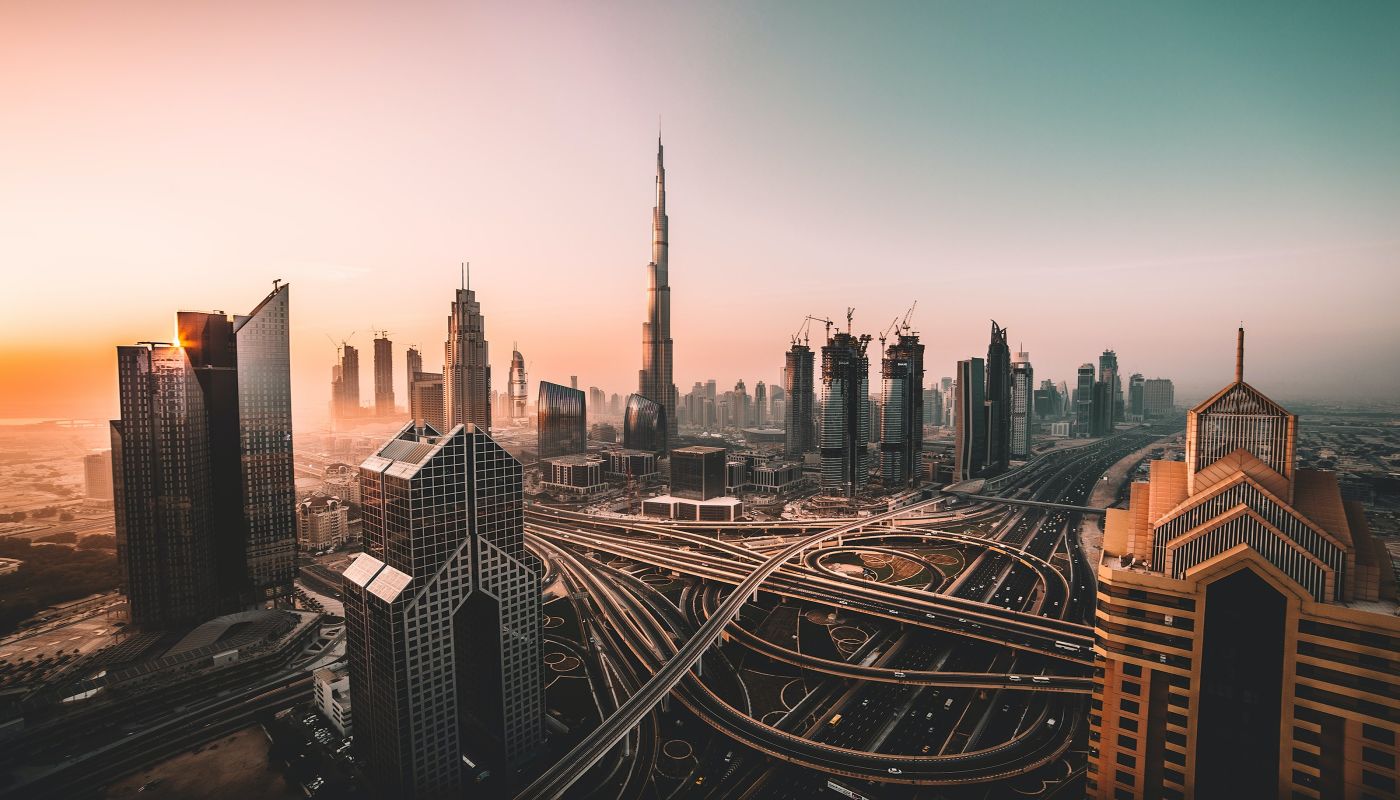
Landscape of United Arab Emirates
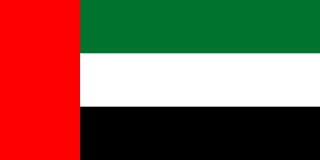
Flag of United Arab Emirates

United Arab Emirates

Asia

The United Arab Emirates (UAE) is a federation of seven emirates located in the Arabian Peninsula. The population of the United Arab Emirates (UAE) is estimated to be around 9.89 million people and is concentrated in urban areas, with around 85% of the population living in cities. The largest city in the UAE is Dubai, which is also the country's economic hub and a popular tourist destination.The country has become known for its modern infrastructure, luxurious shopping malls, and iconic architecture, such as the Burj Khalifa, the world's tallest building. The UAE has also made significant progress in diversifying its economy beyond oil, with investments in technology, tourism, and renewable energy. The UAE has made significant strides in areas such as education and healthcare, and has a growing focus on innovation and entrepreneurship. The country is also home to a diverse and multicultural population, with residents from over 200 nationalities living and working in the UAE. With its growing economy, strategic location, and ongoing efforts to address its challenges, the UAE is poised to continue to be a major player in the region.

What would you like to learn about in United Arab Emirates?

Select a section to explore the country where nonprofits are creating positive change.

About United Arab Emirates

The Trucial States of the Persian Gulf coast granted the UK control of their defense and foreign affairs in 19th century treaties. In 1971, six of these states - Abu Dhabi, 'Ajman, Al Fujayrah, Ash Shariqah, Dubayy, and Umm al Qaywayn - merged to form the United Arab Emirates (UAE). They were joined in 1972 by Ra's al Khaymah. The UAE's per capita GDP is on par with those of leading West European nations. Its high oil revenues and its moderate foreign policy stance have allowed the UAE to play a vital role in the affairs of the region. For more than three decades, oil and global finance drove the UAE's economy. However, in 2008-09, the confluence of falling oil prices, collapsing real estate prices, and the international banking crisis hit the UAE especially hard. The UAE has essentially avoided the "Arab Spring" unrest seen elsewhere in the Middle East, though in March 2011, political activists and intellectuals signed a petition calling for greater public participation in governance that was widely circulated on the Internet. In an effort to stem potential further unrest, the government announced a multi-year, $1.6-billion infrastructure investment plan for the poorer northern Emirates.

Quick Facts

Population
5,473,972 (July 2013 est.)
Area
83,600 sq km
ISO Code
AE
Continent
Asia
Government
federation with specified powers delegated to the UAE federal government and other powers reserved to member emirates
Active Causes
12
View all countries in Asia

Geography & Environment

Climate

desert; cooler in eastern mountains

Terrain

flat, barren coastal plain merging into rolling sand dunes of vast desert wasteland; mountains in east

Natural Resources

petroleum, natural gas

Environmental Issues

lack of natural freshwater resources compensated by desalination plants; desertification; beach pollution from oil spills

People & Society

76.91 years
Avg. Life Expectancy
90%
Literacy Rate
84.4% of total population (2011)
Total Urban Population

Languages

Arabic (official), Persian, English, Hindi, Urdu

Religions

Muslim (Islam - official) 96% (Shia 16%), other (includes Christian, Hindu) 4%

Health Expenditure

3.7% of GDP (2010) of GDP

Education Expenditure

1.1% of GDP (2004) of GDP

Economy

$49,800
GDP per Capita (PPP)
2.4%
Unemployment Rate
19.5% (2003)
Below Poverty Line

Economic Overview

The UAE has an open economy with a high per capita income and a sizable annual trade surplus. Successful efforts at economic diversification have reduced the portion of GDP based on oil and gas output to 25%. Since the discovery of oil in the UAE more than 30 years ago, the country has undergone a profound transformation from an impoverished region of small desert principalities to a modern state with a high standard of living. The government has increased spending on job creation and infrastructure expansion and is opening up utilities to greater private sector involvement. In April 2004, the...

Causes in United Arab Emirates

Environment

The United Arab Emirates (UAE) is a country located in the Arabian Peninsula, characterized by its arid desert climate and rapidly developing urban centers. The environment plays a crucial role in the UAE, influencing various aspects of life from economy to health. The country faces challenges such as water scarcity, air pollution, and coastal degradation due to rapid urbanization and industrial growth. These environmental issues have significant impacts on the health and well-being of UAE residents, as well as on the local ecosystems and biodiversity. Efforts are being made by the government and various organizations to address these challenges through initiatives such as renewable energy projects, conservation programs, and sustainable development practices. Raising awareness about environmental issues is essential for the long-term sustainability of the UAE and the well-being of its population.

Family

In the United Arab Emirates (UAE), family plays a central role in shaping individuals' lives and society as a whole. The traditional Emirati family structure is patriarchal, with strong ties among extended family members. Family is considered the cornerstone of society and is highly valued in Emirati culture. The concept of "al-sheikh wa al-murra" (the sheikh and the mirror) reflects the importance of maintaining family honor and reputation. This emphasis on familial relationships influences various aspects of Emirati life, including decision-making processes, social interactions, and even career choices. Furthermore, families in the UAE often provide emotional support, financial assistance, and a sense of belonging to their members. As a result, nurturing strong family bonds is prioritized, contributing to the overall well-being and stability of individuals and the community as a whole.

Human Rights

The United Arab Emirates (UAE) is a country known for its rapid economic development, modern infrastructure, and cultural diversity. However, human rights issues have been a subject of concern within the nation. While the UAE has made progress in certain areas such as gender equality and education, there are still challenges related to freedom of expression, labor rights, and migrant worker conditions. The kafala system, which ties migrant workers' visas to their employers, has been criticized for facilitating exploitation and abuse. Additionally, restrictions on freedom of speech and assembly have raised alarms among human rights organizations. Despite efforts by the UAE government to enact reforms and improve human rights conditions, there is still room for improvement to ensure the protection and promotion of human rights for all individuals within the country.

Education

Education plays a significant role in the development and growth of the United Arab Emirates (UAE). Over the past few decades, the UAE has made substantial investments in its education sector, aiming to build a knowledge-based economy and foster innovation. The country has established world-class universities and research institutions, attracting students and scholars from around the globe. Education in the UAE is not only focused on academic excellence but also on equipping students with practical skills and knowledge that are relevant to the evolving job market. By prioritizing education, the UAE is preparing its citizens to contribute effectively to the country's socio-economic development and compete in the global arena.

Poverty

The United Arab Emirates (UAE) is a wealthy country known for its opulent cities and luxurious lifestyle. However, beneath this facade of prosperity lies a lesser-known reality of poverty that affects a segment of the population. Despite the country's overall wealth, there are pockets of poverty primarily among low-income workers, migrant laborers, and certain marginalized communities within the UAE. These individuals often struggle to access basic necessities such as adequate housing, healthcare, and education, leading to a cycle of disadvantage and limited opportunities for social mobility. The impact of poverty in the UAE manifests in various ways, including limited social integration, inadequate living conditions, and barriers to economic prosperity. As the UAE continues to grow economically, it is crucial to address these disparities and work towards creating a more inclusive society for all its residents.

Religion

The United Arab Emirates (UAE) is a country located in the Middle East that has Islam as its official religion. Islam plays a significant role in shaping the cultural, social, and political landscape of the UAE. The religion influences various aspects of daily life, including governance, laws, education, and social norms. Mosques are prevalent throughout the country, serving as centers for prayer, community gatherings, and religious education. The government of the UAE upholds Islamic principles in its legal system, with Sharia law forming the basis for legislation. Respect for Islamic customs and traditions is deeply ingrained in Emirati society, guiding behaviors and interactions among individuals. While the UAE promotes religious tolerance and allows for the practice of other faiths within its borders, Islam remains a dominant and influential force in shaping the country's identity.

Clean Water

The United Arab Emirates is a country situated in the Arabian Peninsula, known for its rapid economic growth and modern infrastructure. Despite its wealth and advancements, access to clean water remains a vital issue in the UAE. The country faces challenges such as water scarcity due to its arid climate and high water consumption rates. Additionally, pollution from industrial activities and desalination plants poses a threat to the quality of available water sources. Lack of proper water management and conservation practices further exacerbate the situation, impacting both the environment and public health. Ensuring sustainable access to clean water is crucial for the UAE's future development and well-being of its population.

Economy

The United Arab Emirates (UAE) is a country known for its booming economy, driven primarily by oil and gas exports, tourism, and a growing financial services sector. The economy of the UAE has been significantly impacted by fluctuations in global oil prices, with the country's reliance on oil revenues highlighting its vulnerability to external market factors. In recent years, the UAE government has made efforts to diversify its economy by investing in non-oil sectors such as hospitality, real estate, and renewable energy. Despite these efforts, the country still faces economic challenges including high levels of public debt and a growing wealth gap between citizens and expatriate residents. It is crucial for the UAE to continue diversifying its economy and promoting sustainable growth to ensure long-term economic stability and prosperity for its citizens.

Government

The United Arab Emirates (UAE) is a federation of seven emirates located in the Middle East, known for its rapid economic development and cultural diversity. The government of the UAE plays a significant role in shaping the country's policies and initiatives, impacting various aspects of society. The government's focus on economic diversification, infrastructure development, and social welfare programs has led to substantial progress in areas such as education, healthcare, and employment opportunities for its citizens. Additionally, the government's commitment to sustainable development and renewable energy initiatives underscores its efforts to address environmental challenges and promote a more sustainable future for the country. Through strategic investments and partnerships, the UAE government continues to drive innovation and growth across key sectors, positioning the country as a global hub for trade, tourism, and investment.

Health

The United Arab Emirates (UAE) is a rapidly developing country located in the Middle East, known for its flourishing economy and modern infrastructure. Despite its prosperity, health remains a significant concern in the UAE. One of the primary health challenges facing the country is the rise in lifestyle-related diseases such as diabetes, obesity, and cardiovascular conditions. Factors contributing to these health issues include sedentary lifestyles, unhealthy dietary habits, and high levels of stress due to the fast-paced nature of urban living. Additionally, the prevalence of smoking and air pollution further exacerbate health risks in the UAE. To address these challenges, the government has been implementing various initiatives to promote healthy living, including campaigns to raise awareness about the importance of regular exercise, balanced nutrition, and smoking cessation programs.

Children

The United Arab Emirates (UAE) is a country known for its rapid development and modernization. However, amidst the glitz and glamour, there exist issues that affect children in the country. One of the key concerns is child labor, particularly in sectors such as agriculture, domestic work, and construction. Despite efforts by the government to address this issue through legislation and enforcement, child labor persists in some parts of the UAE. Children in vulnerable situations, such as those from low-income families or migrant communities, are at a higher risk of being exploited for cheap labor. Additionally, access to quality education can be a challenge for some children in remote areas or marginalized communities. Ensuring that every child in the UAE has access to education and is protected from exploitation is crucial for the country's sustainable development and progress towards achieving the Sustainable Development Goals.

Animals

The United Arab Emirates (UAE) boasts a rich biodiversity, with a variety of animals playing a crucial role in its ecosystem. However, the rapid urbanization and development in the country have posed significant threats to wildlife habitats and populations. Animals such as Arabian oryx, hawksbill turtles, and Arabian leopards face challenges due to habitat loss, illegal poaching, and climate change. Conservation efforts in the UAE are vital to protect these species and maintain the delicate balance of the ecosystem. Government initiatives, conservation projects, and public awareness campaigns are essential in safeguarding the unique fauna of the UAE for future generations to appreciate and enjoy.

Nonprofits Working in United Arab Emirates

Discover organizations making a difference in United Arab Emirates

Handid Braille Services

Handid Braille Services

Handid Braille Services provides timely delivery of media (including braille transcriptions, tactile graphics, large print, and online resources) in soft or hard-copy, proofreading, consulting and research facilitating creation, preparation and production of media for visually-impaired readers, with a focus on public-facing organizations and institutions. But organizations that could and should be producing braille documents and accessible online media often don't consider it when planning and budgeting. This means that producing braille becomes an extra cost they did not consider, which unfortunately leads to uncertainty and hesitation. Handid Braille Services is a 501(c)(3) corporation that uses resources from your donations to reduce or remove costs to organizations for producing braille and accessible content, thereby increasing access to braille and accessible media for readers who are blind and low vision.

., Idaho

Make Your Impact Today

Discover causes you care about and support the nonprofits making a difference in communities around the world.

Are you a nonprofit? Join Project World Impact for free

Join Us Free